JAPOW VANS
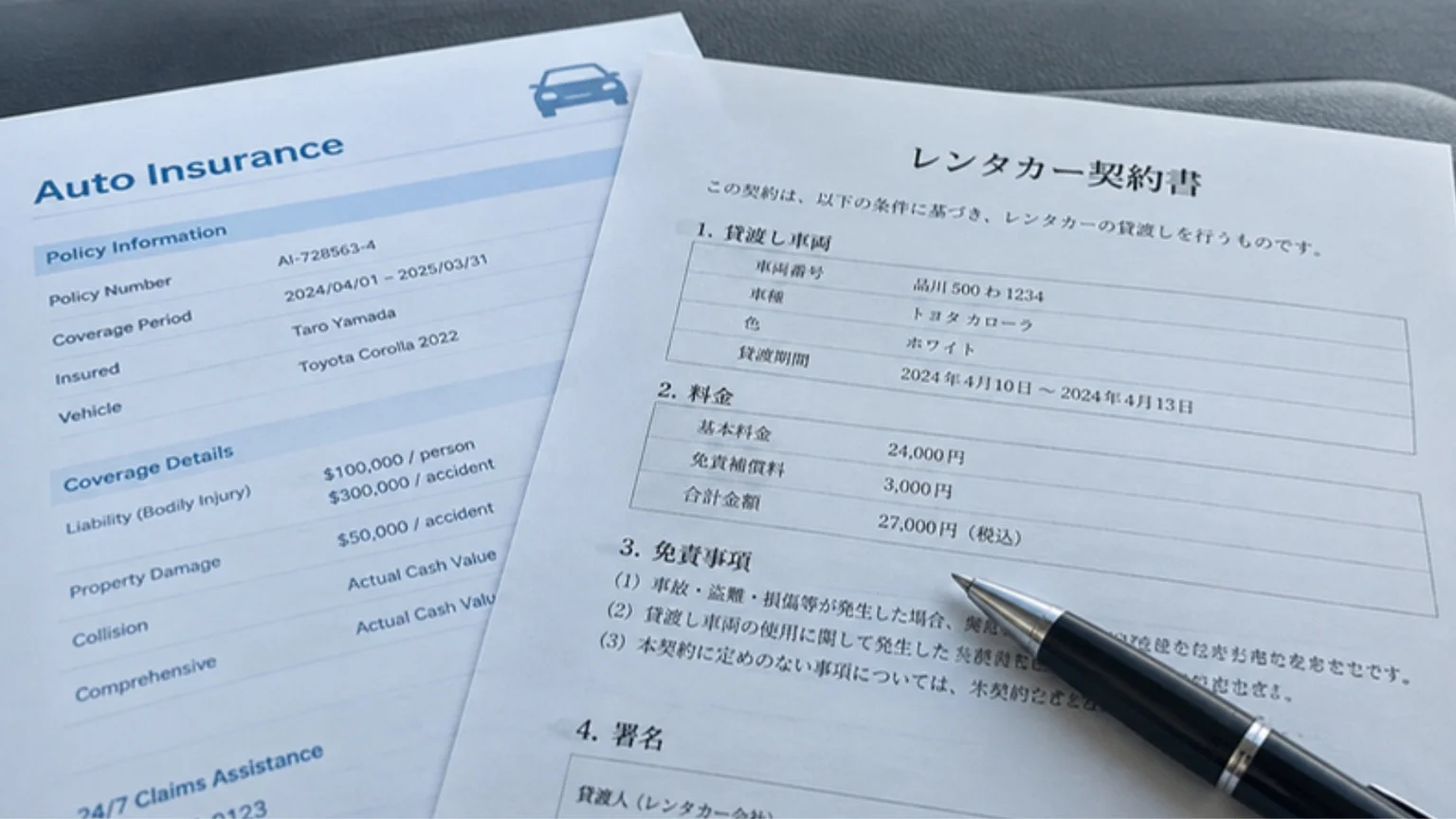
Japan requires every registered vehicle to carry a baseline insurance policy, so in one sense every rental car is already "insured." The catch is how narrow that baseline coverage actually is — it leaves out most of what a visitor would assume is covered, which is why rental companies sell additional protection on top.
Compulsory insurance (CALI) covers less than you'd think
Every vehicle in Japan carries 自賠責保険 (Compulsory Automobile Liability Insurance, or CALI), regulated by the Ministry of Land, Infrastructure, Transport and Tourism. By law, it is built into the vehicle's registration, not something you opt into separately.
| What it covers | Bodily injury or death to third parties outside your own vehicle — up to ¥1.2 million per injured victim, up to ¥30 million for a death, and ¥750,000–¥40 million for permanent disability depending on severity. |
|---|---|
| What it does NOT cover | Damage to the rental vehicle itself, damage to third-party property (other cars, guardrails, buildings), or the driver's own injuries. |
Voluntary insurance fills the gap
This is where the rental company's own optional insurance package matters. Based on the insurance terms published by a major Japanese rental chain, a typical package adds:
- Unlimited bodily injury liability on top of CALI
- Property damage liability, typically with a deductible of around ¥50,000 payable by the renter
- Damage to the rental vehicle itself, up to its cash value, again with a deductible
- Personal accident coverage for occupants, often up to around ¥30 million per person
Exact deductible and coverage amounts vary by rental company — confirm the specific figures with your provider rather than assuming a single nationwide standard.
The Non-Operation Charge (NOC) is separate from insurance entirely, and it catches people off guard. If a damaged vehicle has to come out of service for repair, rental companies in Japan charge a fee to cover their lost rental income while it's off the road — commonly reported in a range of roughly ¥20,000 if the car is still drivable, up to around ¥50,000 or more if it isn't. Standard damage-waiver insurance usually does not cover this charge; some companies sell a separate add-on that does. Ask specifically about NOC coverage, not just "full insurance."
Your home insurance or credit card probably doesn't fill the gap either
Most North American personal auto insurance policies do not automatically extend to a rental car in Japan — check with your own insurer before assuming otherwise. Credit card rental-car coverage (Visa, Mastercard and similar) is generally not geographically excluded for Japan specifically, but it typically only covers damage to the rental vehicle itself, not third-party liability, and it almost never covers Japan's NOC fee. The practical takeaway: plan to buy the rental company's own optional coverage rather than relying on coverage from home.
One more thing that can void your coverage entirely
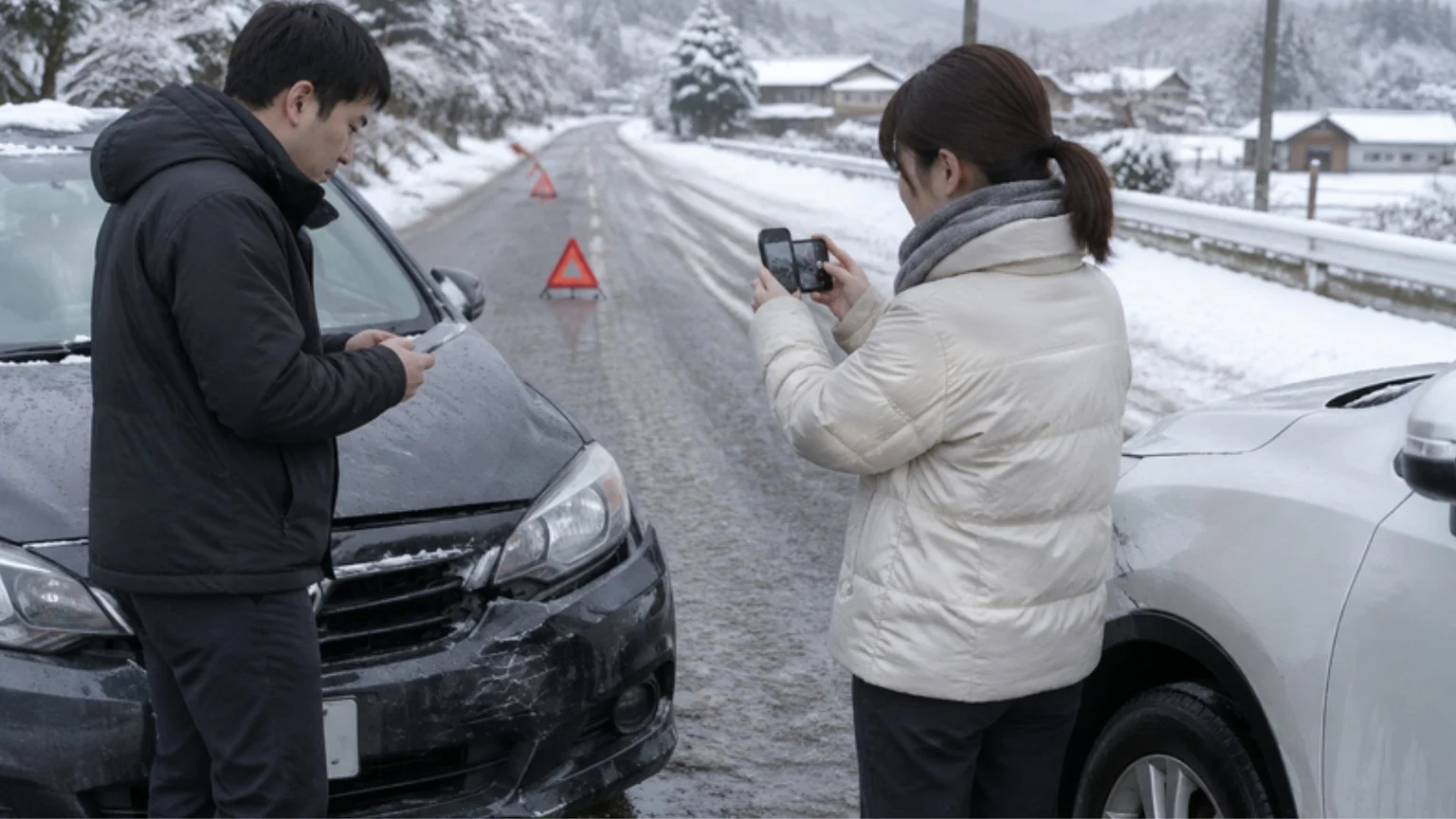
Rental insurance terms commonly exclude any claim where the accident wasn't reported to police, where the driver was unlicensed or intoxicated, or where someone not listed on the agreement was driving. In practice, that means calling the police after any collision — even a minor parking-lot bump — isn't optional if you want your insurance to actually apply. See our guide to what to do after an accident in Japan.
Sources:
Ministry of Land, Infrastructure, Transport and Tourism — CALI overview
Toyota Rent a Car — insurance and compensation terms
JAF (Japan Automobile Federation) — emergency measures after an accident