JAPOW VANS
Japan's Road Traffic Act prohibits driving under the influence of alcohol, and this applies equally to visitors driving rental vehicles. There's no separate, more lenient standard for tourists or international license holders — the same law, the same enforcement, and the same penalties apply.
The legal limit is effectively zero in practice
Japan has two tiers of alcohol-related driving offense under Article 65 of the Road Traffic Act:
| Offense | Threshold / standard |
|---|---|
| 酒気帯び運転 (driving with alcohol detected) | Breath alcohol concentration of 0.15 mg/L or more — roughly one drink for many people, well below what most visitors would consider "over the limit" at home. |
| 酒酔い運転 (drunk driving) | Visibly impaired driving ability, regardless of the measured breath/blood alcohol level. |
In practice, this means any detectable alcohol can trigger an offense — there is no safe "one beer and I'll be fine" threshold the way there might be in some other countries. The only reliable approach is zero alcohol if you're driving that day.
Penalties are serious, not symbolic
- 酒気帯び運転: up to 3 years imprisonment or a fine of up to ¥500,000, plus administrative license penalties (13 to 25 demerit points depending on the breath alcohol level, ranging from a 90-day suspension to outright revocation).
- 酒酔い運転: up to 5 years imprisonment or a fine of up to ¥1,000,000, with 35 demerit points resulting in license revocation and a disqualification period before re-application.
It's not just the driver. Japanese law also penalizes passengers who knowingly ride with a driver who has been drinking, and anyone who provides alcohol to a person they know will be driving, or who lends a vehicle to someone they know has been drinking. If your group is traveling together in one van, this extends responsibility beyond just whoever is behind the wheel.
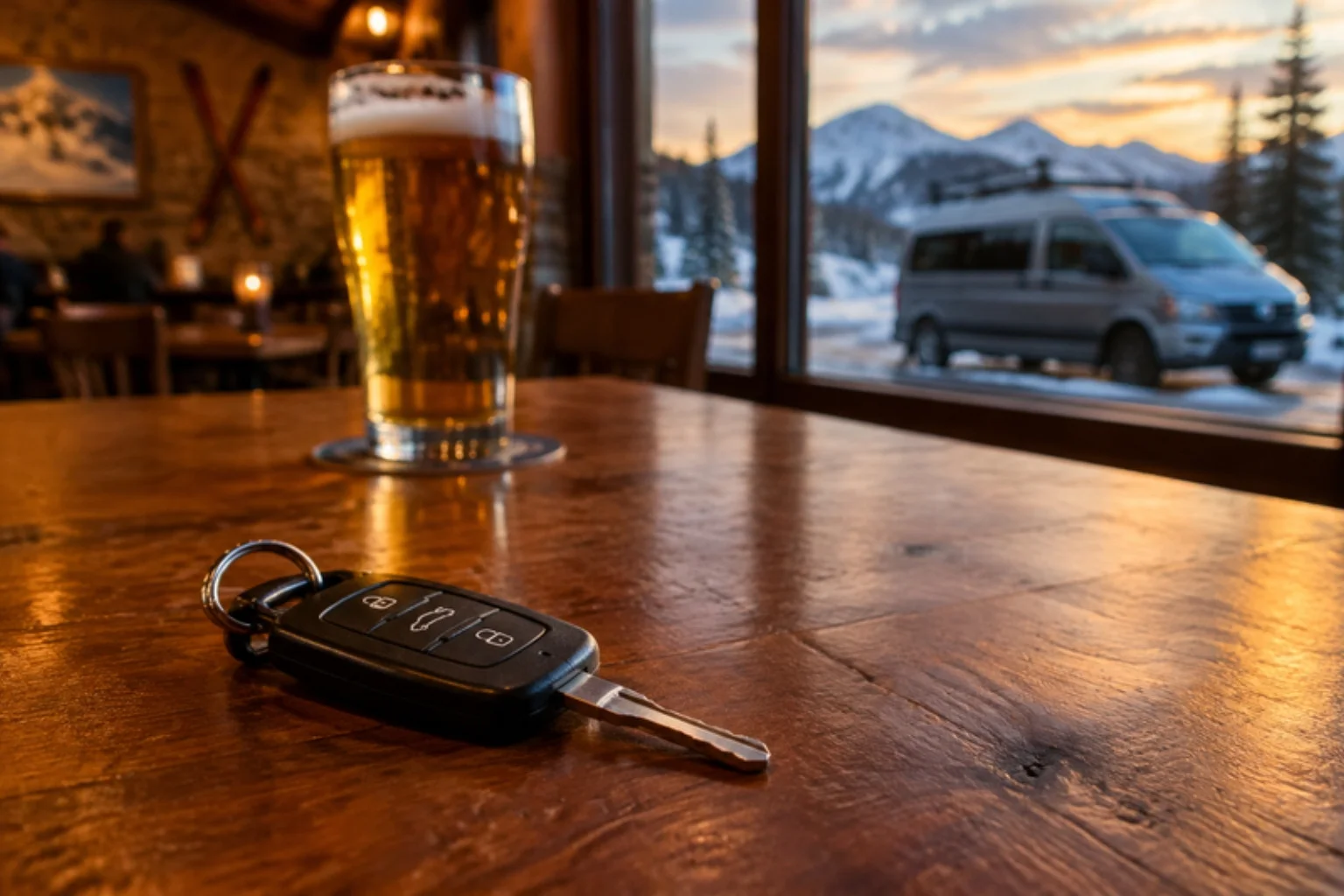
Practical planning for a ski trip
- Decide who's driving for the day before any ōtoshi-kai or après-ski drinks start, and stick to it.
- Many resort towns have taxis, hotel shuttles, or walkable izakaya districts — use them instead of driving back from dinner.
- If you're unsure whether alcohol from the night before has cleared your system, don't guess — wait longer than you think you need to, especially before a morning mountain-pass drive.
Penalty figures reflect the standard Road Traffic Act thresholds; actual sentencing varies by case. Confirm current details with official sources.