JAPOW VANS
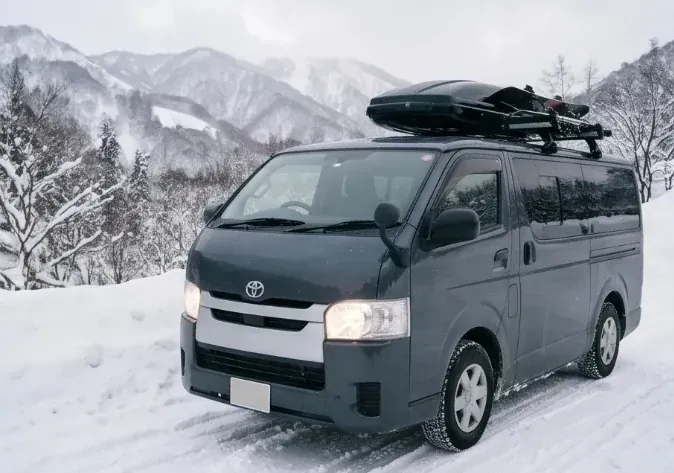
Parking rules in Japan are stricter than many visitors expect, and enforcement is consistent — including on quiet-looking streets in small towns. The good news is that the system is predictable once you know the basics: use a coin parking lot or a resort's own lot, and don't leave the vehicle on the street unless a space is clearly marked for it.
Why you can't just park on the street
Car owners in Japan are required to register a designated parking space for their vehicle, and the same mindset carries over to everyday driving: streets are for traffic, not storage. Roadside parking is only allowed where it's explicitly permitted — a marked parking zone, a parking meter, or a stretch with no restricting sign or line. Everywhere else defaults to restricted, whether or not a sign is posted at that exact spot (restrictions also apply automatically near intersections, bends, and crosswalks).
The two signs to recognize
These are the two signs you'll see most often, and they mean different things:
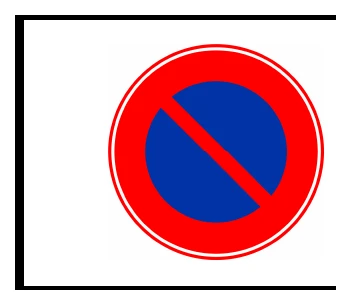 No parking (鯈車禁止)
You can't leave the vehicle unattended, but a brief stop to load or unload passengers is generally fine.
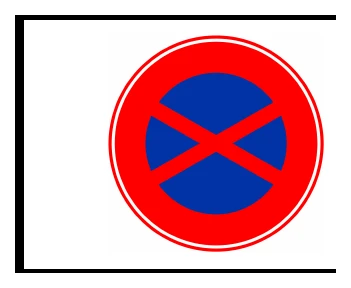 No stopping or parking (鯈停車禁止)
No stopping at all, even briefly — not even to drop someone off.
Sign images cropped from the National Police Agency's official pamphlet “Follow the Rules and Drive Safely in Japan” (警察府, National Police Agency), used and adapted under Japan's Public Data License (PDL1.0).
Parking meters and marked zones have their own rules. Where a time-limited parking zone or parking meter sign is posted, it will state the hours the restriction applies and the maximum stay. Outside those posted hours, the restriction doesn't apply — but you still need to park fully within the marked bay; a vehicle that sticks out of its space is itself a violation.
How coin parking works
Coin parking (コインパーキング) lots — run by operators like Times, Park24, and NPC24H — are the easiest legal option almost everywhere in Japan, from city blocks to small resort towns. There are two common setups:
| Type | How it works |
|---|---|
| Flap lot | Each space has a metal flap in the ground. It rises a minute or two after you park, locking the car in place. To leave, go to the payment machine, enter your space number, pay, and wait for the flap to lower fully before driving out. |
| Gate lot | You take a ticket at the entry barrier and keep it with you. At exit, insert the ticket into the machine, pay the amount shown, and the barrier lifts once payment is confirmed. |
Rates are usually posted at the entrance, often with a stated daily maximum (框上格 / "cap") that's useful for a full day at a ski resort. Payment methods vary by operator — many machines take cash, and a growing number accept IC cards, QR payment, or credit cards, but not all do, so carry some cash as a backup. Watch for 空 (available) and 满 (full) on entrance signs — don't pull in if it shows 满, even if a space looks open.
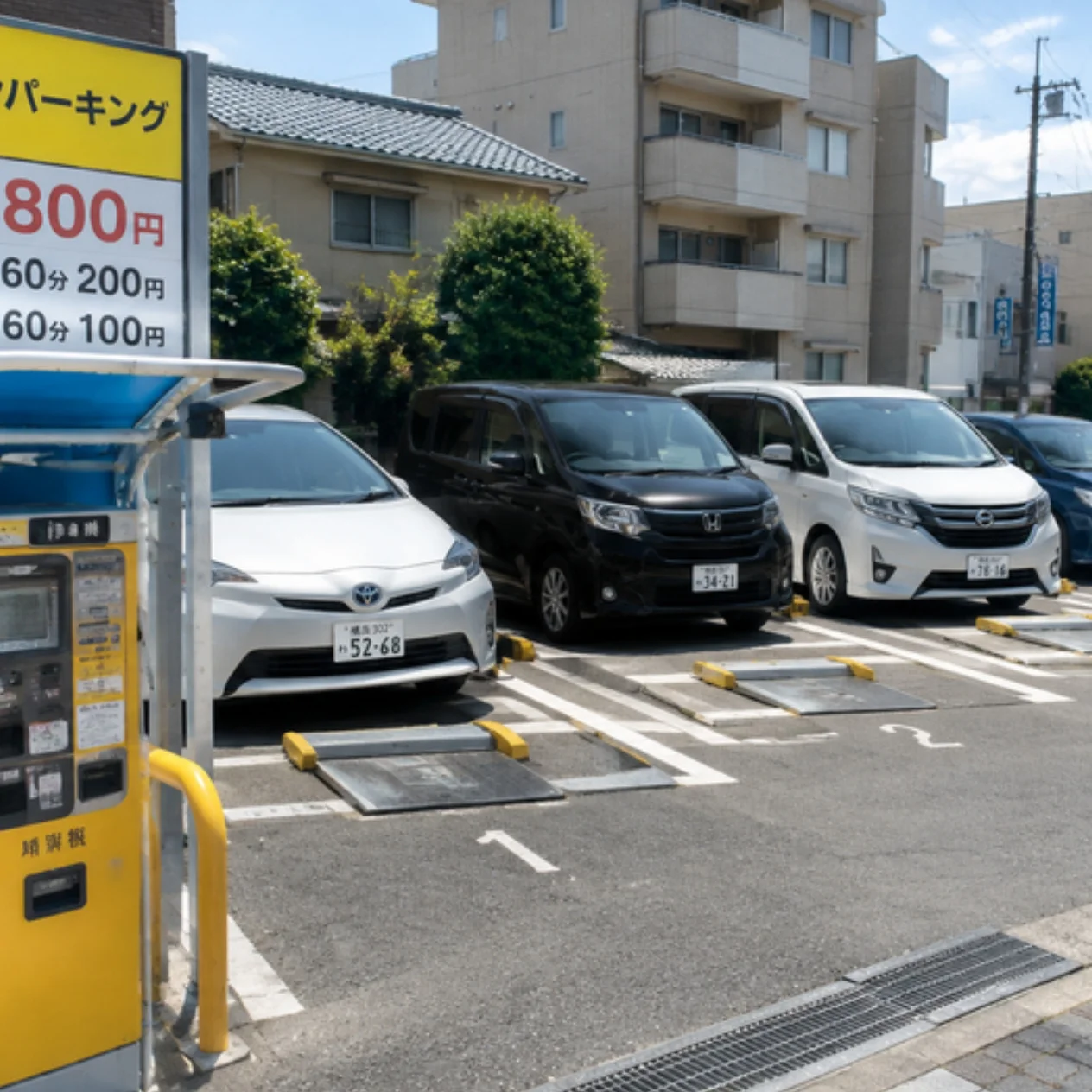
Reserve ahead for popular areas. Apps such as akippa and the operators' own apps (e.g. Times Parking) let you search and sometimes pre-book a space with a fixed price before you arrive, which takes the guesswork out of busy resort towns on powder weekends.
What happens if you park illegally
Illegal parking is actively enforced, including by civilian parking patrol officers who can issue a violation notice (放置車儺確認标章) and attach it to the vehicle even if you're not there. Fines for a standard passenger vehicle typically run from around ¥10,000 up to ¥18,000 or more depending on the specific violation and whether the vehicle was left unattended, plus license penalty points for the registered driver. It isn't worth the risk of a short stop to save a few minutes — use a coin parking lot instead.
Parking near ski resorts
Most ski resorts have their own parking lots for day guests, and many are free or charge a flat daily fee rather than an hourly rate — check the resort's website in advance, since larger resorts often have multiple lots at different distances from the base area. A few things worth knowing for a van:
- On powder mornings, the closest lots fill up early; arriving before the lifts open gives you the best chance at a close spot.
- Snow removal crews need lots cleared on a rotation during heavy snowfall — follow any posted instructions about which rows to use.
- If you're staying overnight near a resort, confirm whether your lodging's own parking is included or whether you'll need a separate overnight lot, since many day-use resort lots aren't meant for overnight parking.
Planning tips
- Default to a coin parking lot or your destination's own lot — don't assume a quiet street is fine to park on.
- Keep some cash on hand for parking machines that don't accept cards; see our gas stations & convenience stores guide for where to find cash and supplies on the road.
- If you're linking multiple resorts on one trip, check each resort's parking page ahead of time — see our multi-resort route guide for planning.
Parking rules, fine amounts, and enforcement practices can change and vary by prefecture. Always follow the signage and markings you see on the day.
- National Police Agency — Follow the Rules and Drive Safely in Japan (English) — sign images on this page are adapted from this source under PDL1.0.
- Tokyo Metropolitan Police (Keishicho) — Correct Use of Paid Parking Zones
- Tokyo Metropolitan Police (Keishicho) — Illegal Parking Patrol and Enforcement
- Aichi Prefectural Police — Types of Parking and Stopping Violations
- JAF — Time-Restricted Parking Zones and Parking Meters