JAPOW VANS
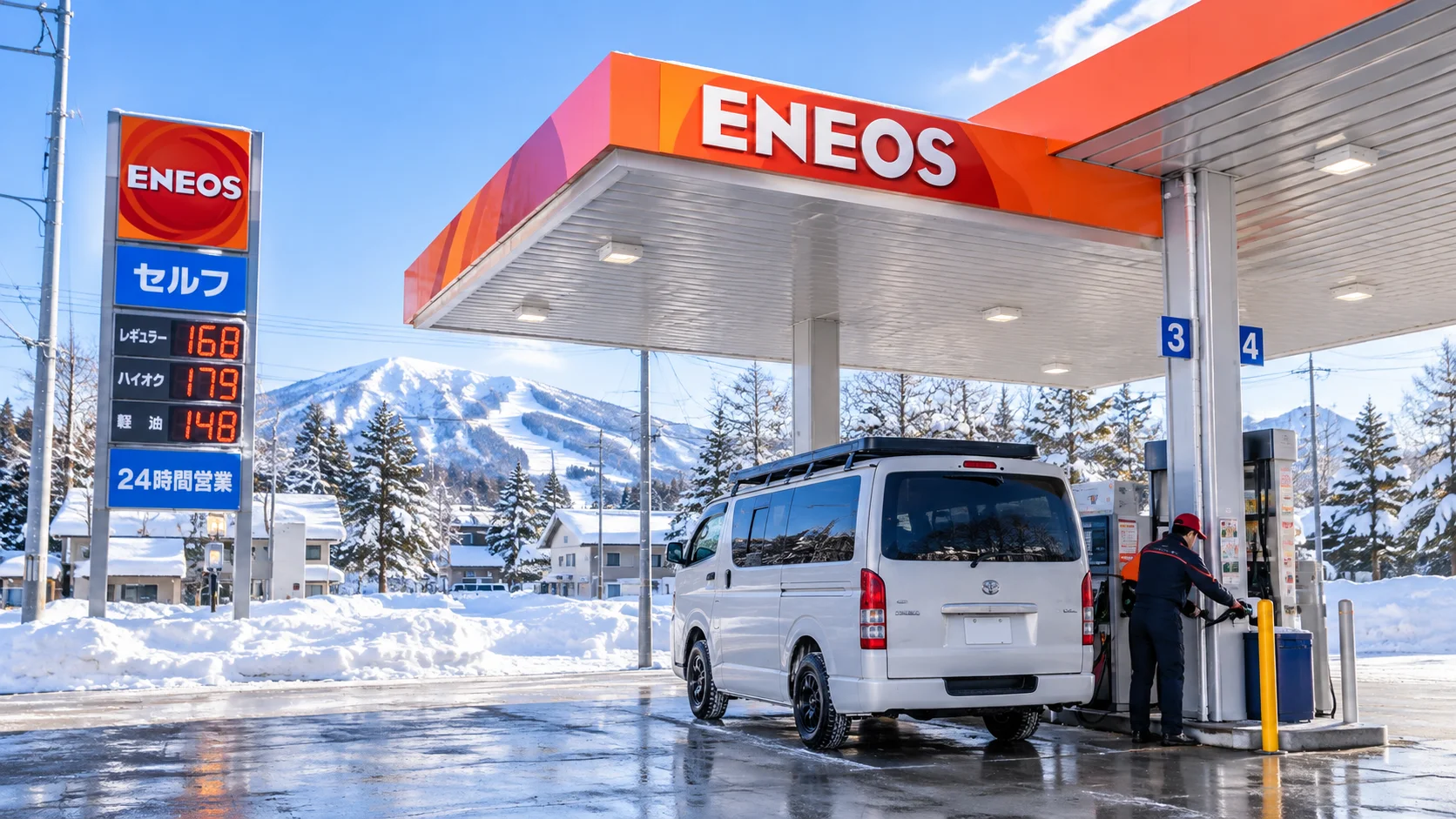
Long-distance drives in Japan are well served by gas stations, convenience stores (konbini) and roadside rest stations — you're rarely far from any of the three, even on mountain routes. Here's how each one works.
Gas stations: self-service vs. full-service
Japan has both self-service (セルフ, serufu) and full-service stations. Full-service is straightforward — pull up and an attendant handles everything, including windshield cleaning, for a slightly higher price per liter.
At a self-service station, the typical steps are:
- Pull into an open pump and turn off the engine.
- At the touch panel, select payment method (cash or credit card) and fuel type.
- For a rental van, use "レギュラー (regular)" unless told otherwise — check your rental agreement for the correct fuel grade.
- Touch the static-discharge sheet on the pump before handling the nozzle (a standard safety step in Japan).
- Select the nozzle for your fuel type and fill up.
Major international card networks (Visa, Mastercard) are widely accepted at self-service stations, though it's worth carrying some cash as a backup in rural areas.
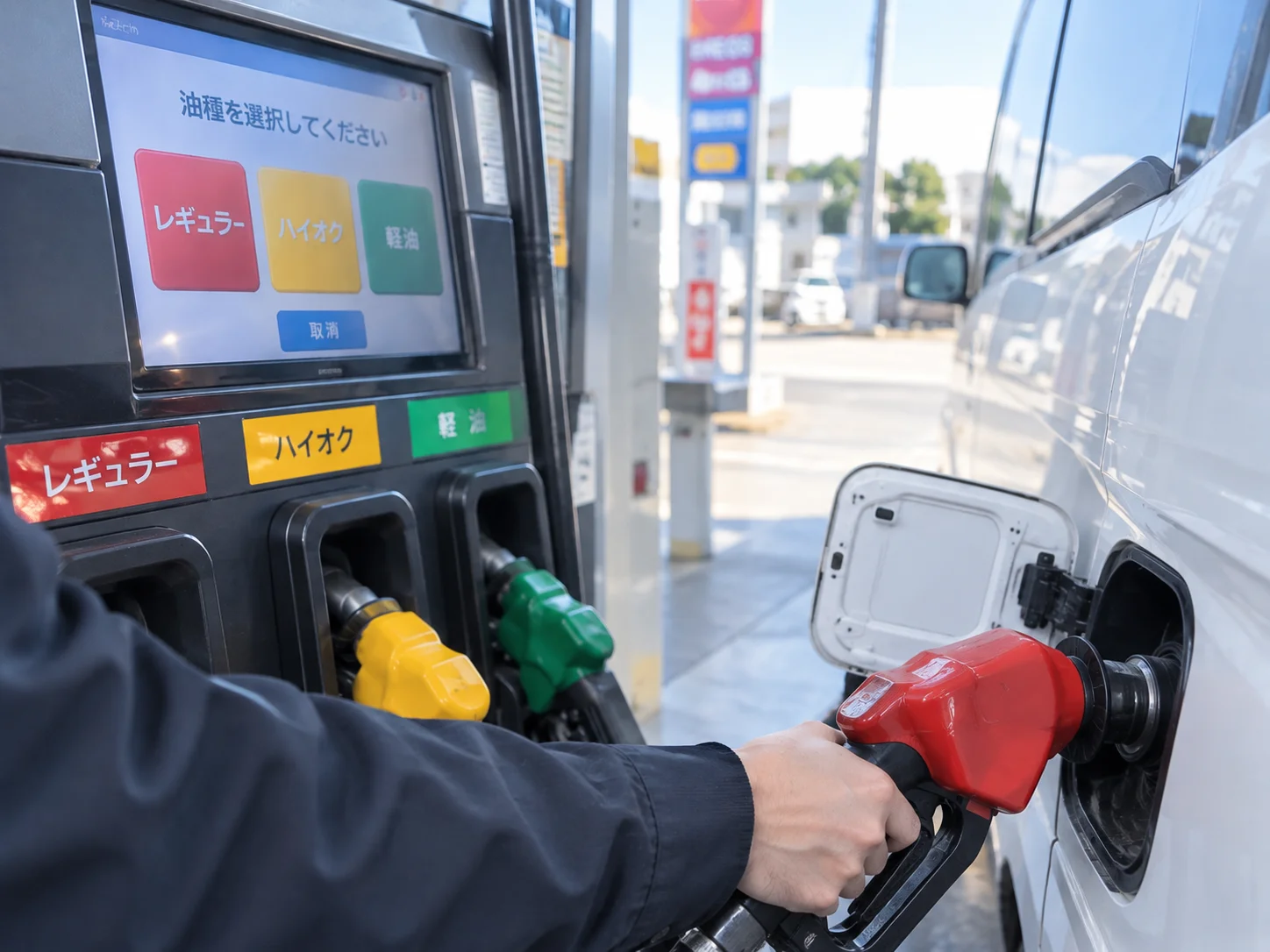
Not sure which fuel your van takes? Check the fuel door or your rental paperwork before you leave. Using the wrong fuel type is a costly mistake to avoid.
Convenience stores: your 24-hour pit stop
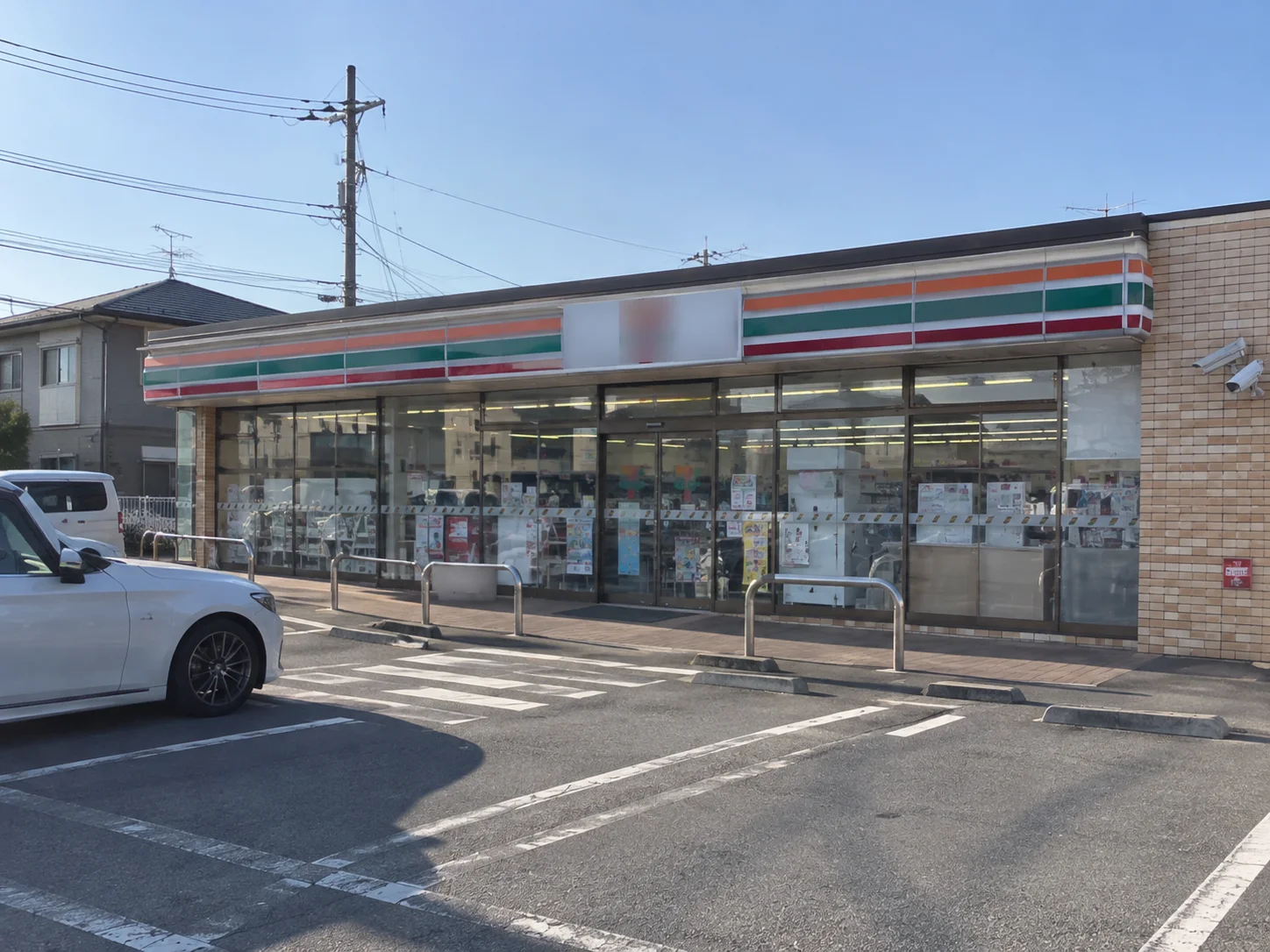
Konbini (7-Eleven, Lawson, FamilyMart) are everywhere in Japan, including along most highway routes to ski regions, and are open 24 hours. They're a reliable stop for:
- Restrooms (generally free and clean, though some rural locations may restrict access late at night)
- Hot and cold food, coffee, and snacks
- ATMs that accept foreign cards
- Wi-Fi at many locations
Michi-no-eki: roadside stations built for breaks
Michi-no-eki (道の骤, "road stations") are government-registered rest stops along Japan's main roads, built specifically for driver breaks. Most offer free 24-hour restrooms and parking, along with local food stalls, produce stands and tourist information — a good option if you want a longer stop than a konbini run.
| Stop type | Best for |
|---|---|
| Gas station | Refueling; some have attached konbini or restrooms. |
| Konbini | Quick restroom break, snacks, ATM, Wi-Fi — available 24 hours. |
| Michi-no-eki | Longer rest, local food, free parking, often scenic. |
Planning tips
- On mountain routes, gas stations can be spaced farther apart — don't let the tank run low before a pass.
- Build in a stop every couple of hours on long legs; it also helps with alertness on snowy roads (see our winter driving guide).
- Keep some cash on hand for rural stations or stalls that don't take cards.
Payment acceptance and opening hours can vary by location and season. This guide describes typical, not guaranteed, conditions.