JAPOW VANS
Australian drivers already drive on the left at home, so the adjustment is smaller. For US and Canadian visitors, Japan reverses both which side of the road you drive on and which side of the car the steering wheel is on — and the two or three small habits below cause more first-day confusion than anything else.
The controls are mirrored, not just the road
On a right-hand-drive Japanese car, the turn signal stalk is on the right side of the steering column and the wiper stalk is on the left — the opposite of a typical North American left-hand-drive car. The single most common new-driver mistake is reaching for what feels like the indicator and switching on the wipers instead, especially in the first day or two. It's harmless, but expect it to happen at least once.
One adjustment you won't have to make: almost every rental vehicle in Japan, including vans, is automatic transmission. See our automatic vs manual guide — you only need to relearn which side of the road to drive on, not also which hand shifts gears.
Left-priority at intersections
At ordinary uncontrolled intersections without signals or signs, Japan's Road Traffic Act gives right-of-way to the vehicle approaching from the left — the mirror image of the "right priority" rule many visitors are used to. Combined with keep-left lane discipline (the left lane is the default travel lane; the right lane is for overtaking only), it's worth consciously checking your assumptions at every unfamiliar intersection for the first few days.
The most common mistake: turning into the wrong lane
The single most frequently cited error among new visitors is turning into the right (oncoming) lane after a turn, particularly on quiet streets or right after leaving a parking lot, when there's no other traffic to copy. Make a habit of consciously confirming "stay left" after every turn until it becomes automatic.
A note for a larger vehicle
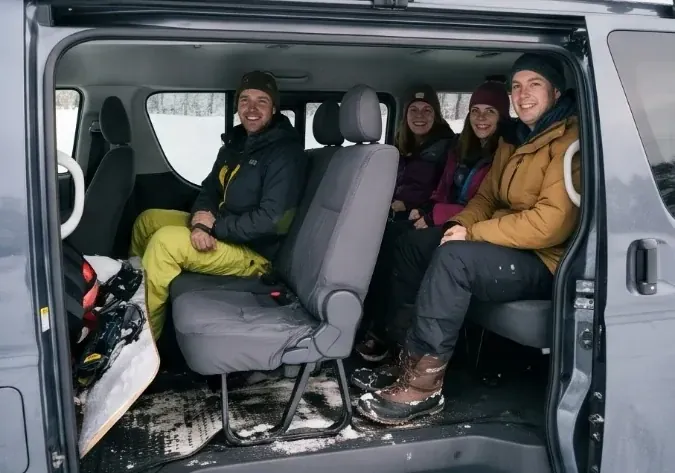
In an 8-seat van, the driver's seat is on the right side of the vehicle, which changes your depth perception on the left side — now the far side from the driver. This matters more in a wider, longer vehicle than in a compact rental car, especially on narrow Japanese streets. Use your left mirror deliberately, and don't hesitate to ask a passenger to help judge clearance on tight roads.
Quick adjustment checklist
- Pause before signaling for the first day or two — confirm it's the right stalk, not the wipers.
- At unmarked intersections, remember left-approaching traffic has priority.
- After every turn, consciously check you've settled into the left lane.
- In the van specifically, lean on your left mirror and a passenger spotter on narrow roads.
Sources:
Japanese Law Translation (official) — Road Traffic Act