JAPOW VANS
Japan's expressway network is well-signed and easy to drive once you know a few conventions that differ from North America or Australia. This guide covers the mechanics of actually using the road — lane discipline, rest stops, and what happens if you miss your exit. For speed limits and road signs, see our speed limits and road signs guide; for how tolls work, see our ETC and tolls guide.
Keep left, pass on the right
On multi-lane sections, the left lane is the standard driving lane and the right lane is for overtaking only. NEXCO's own English-language guidance for expressway drivers states this directly: keep to the left-hand lane in normal driving, and move to the right only to pass a slower vehicle, then return left afterward. Sitting in the right-hand lane without overtaking is both discouraged and, on signed sections, against the rules — it's a more rigid version of the "slower traffic keep right/left" habit many visitors already have from home, just mirrored for Japan's left-hand traffic.
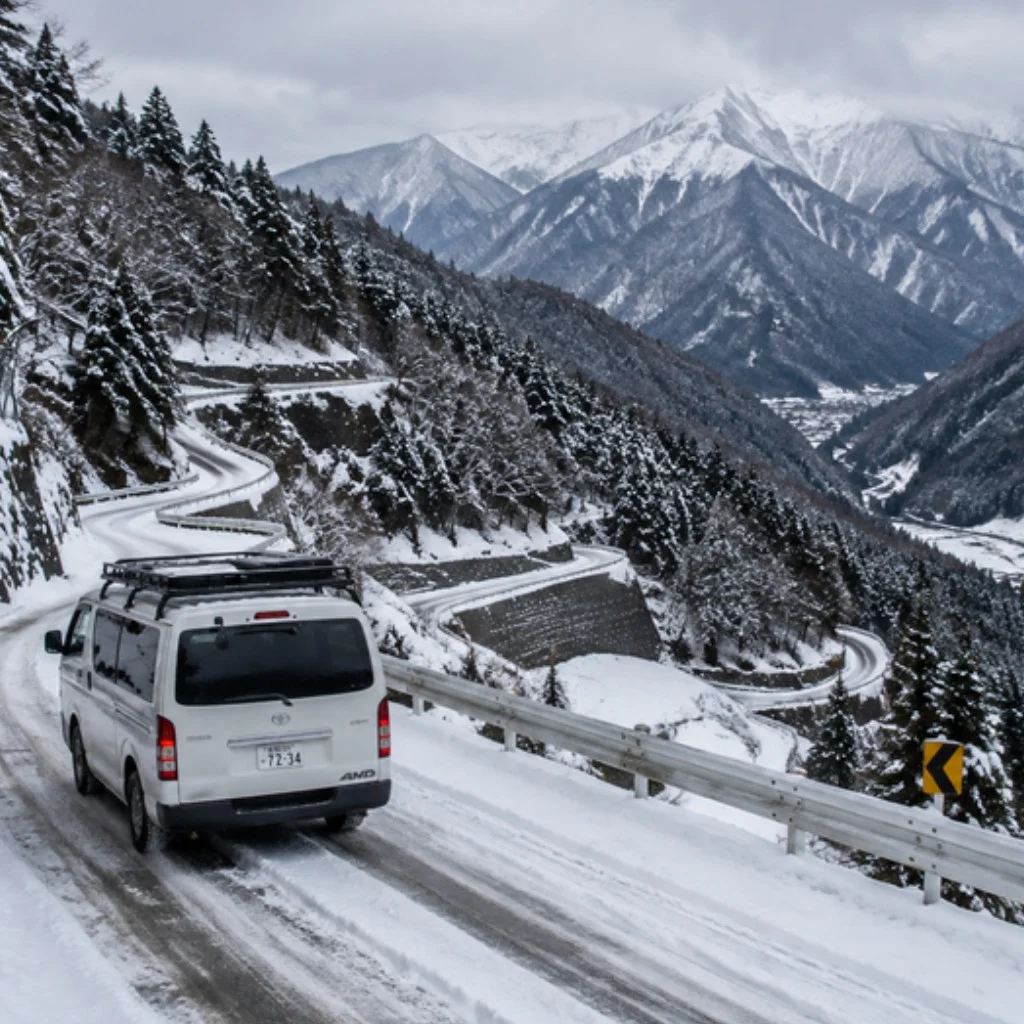
This matters more in a van than a sedan: a loaded 8-seat HiAce accelerates and overtakes more gradually, so plan your pass earlier and don't linger in the right lane once you're clear.
Service areas (SA) vs. parking areas (PA)
Japan's expressways have two types of rest stop, and the difference affects trip planning:
| Type | What you'll find |
|---|---|
| Service Area (SA) | Larger stops with fuel, restaurants, shops, and restrooms. Spaced roughly every 50–100 km, more densely on frequently used sections. |
| Parking Area (PA) | Smaller stops, mainly restrooms and vending machines, sometimes with light food options. Spaced more frequently in between SAs. |
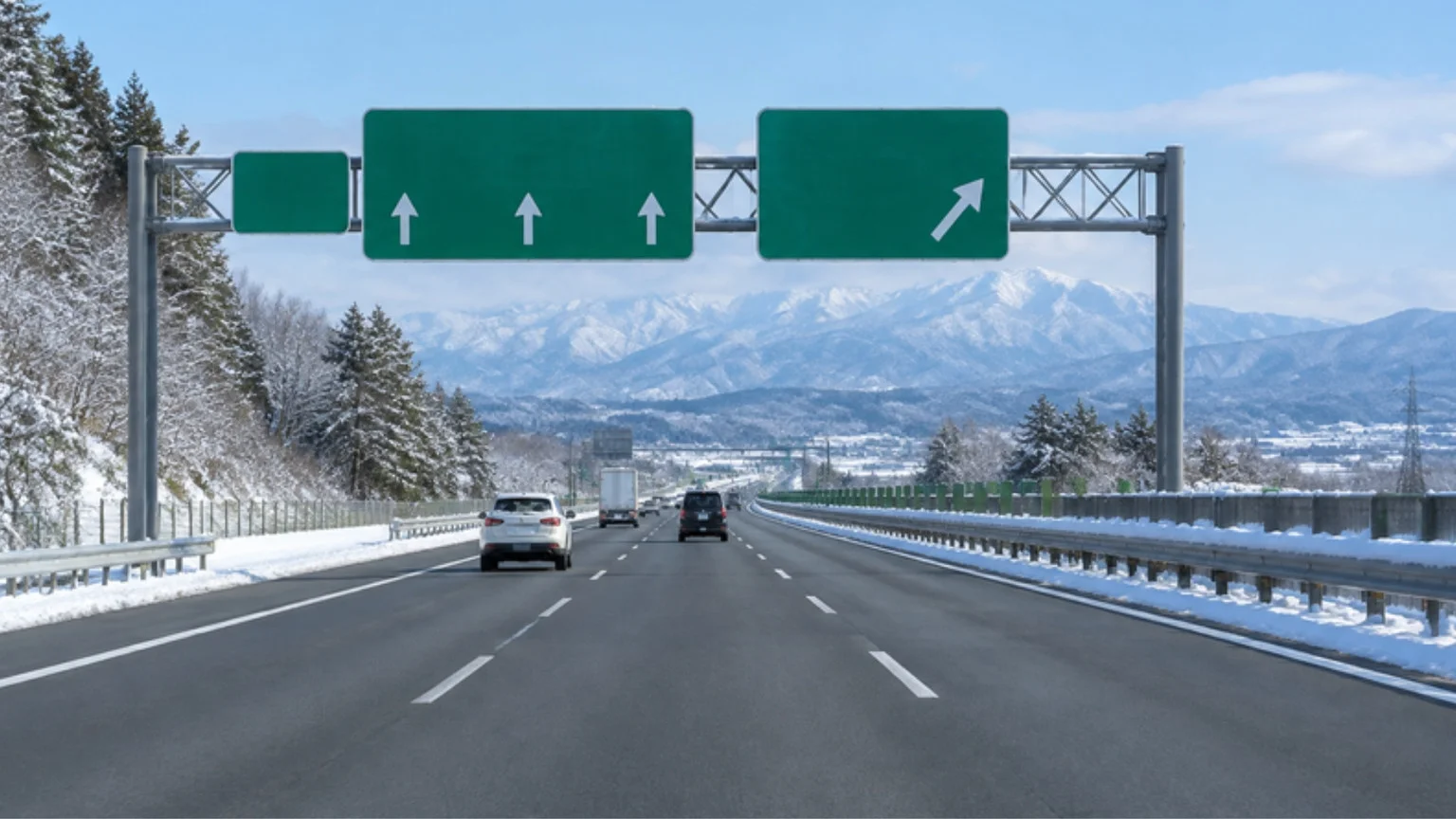
Overhead green signs mark upcoming SAs and PAs along with the distance, so you can plan a fuel or bathroom stop in advance rather than guessing. On a long leg between resorts, it's worth noting whether the next stop is an SA or a PA if you need fuel specifically — not every PA has a gas station.
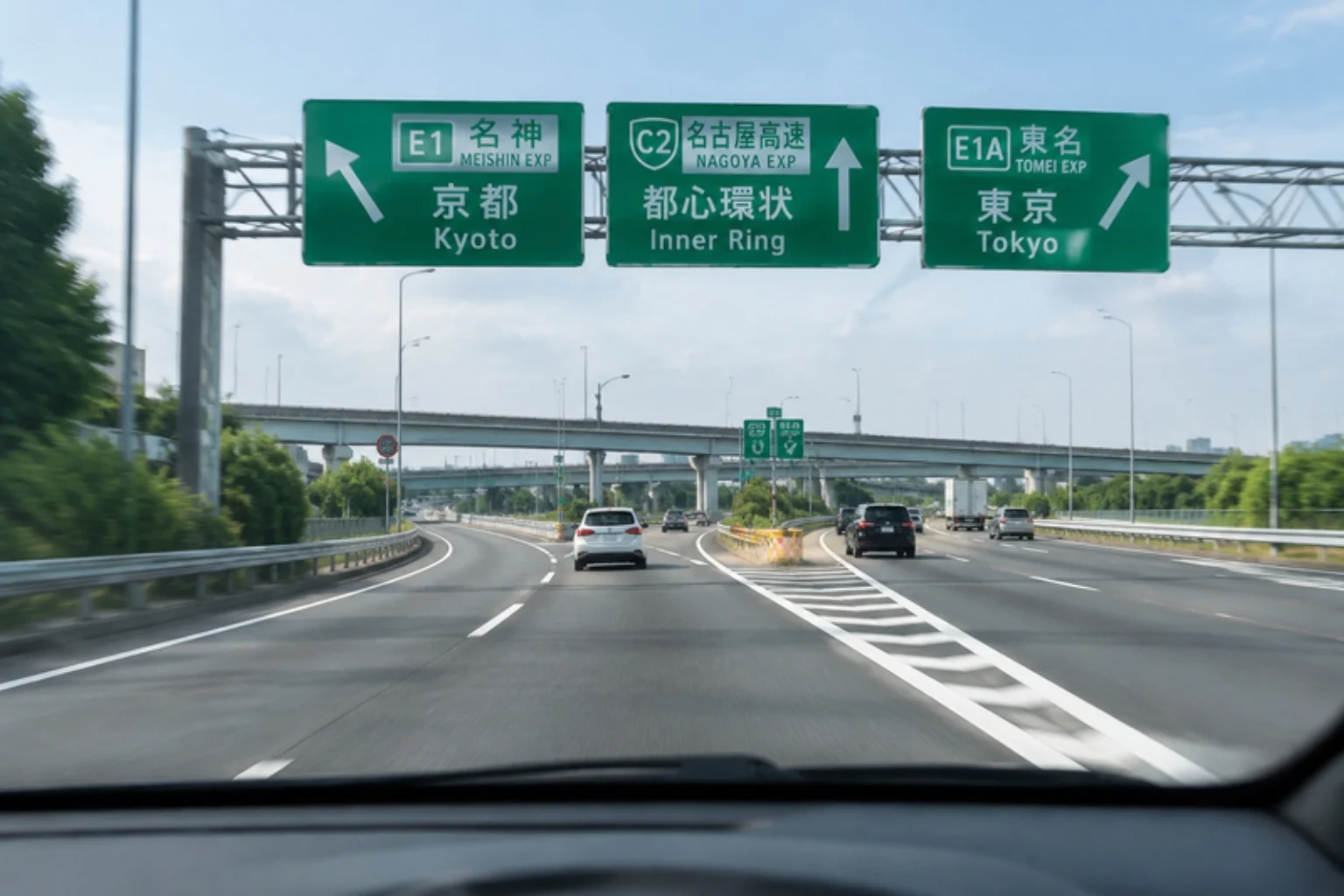
If you miss your exit
Missing an exit happens to first-time visitors more than they expect, since exit signage is in both Japanese and English but can still come up quickly if you're also watching speed and lane position. The answer is simple: never stop, reverse, or try to cut back across lanes to reach a missed exit. NEXCO Central's official safety guidance is explicit that stopping or reversing on the expressway main line is extremely dangerous and is itself a traffic violation.
What to actually do: continue to the next exit or the next junction, then either get off and re-enter in the correct direction, or take the next interchange to turn around via the connecting local roads. The extra toll and few extra kilometers are a minor cost compared to the risk of stopping on a high-speed road.
Other lane conventions worth knowing
- ETC lanes: slow to around 20 km/h before passing through an ETC gate — the barrier doesn't lift instantly, and approaching too fast is a common cause of minor toll-gate incidents.
- Merging: acceleration lanes at expressway on-ramps can be shorter than what you're used to; build speed early rather than merging at a crawl.
- Tunnels: headlights on is required in all tunnels, even short, well-lit ones.
Signage and lane conventions are consistent nationwide but always defer to posted signs on your specific route, which take precedence over general guidance.