JAPOW VANS
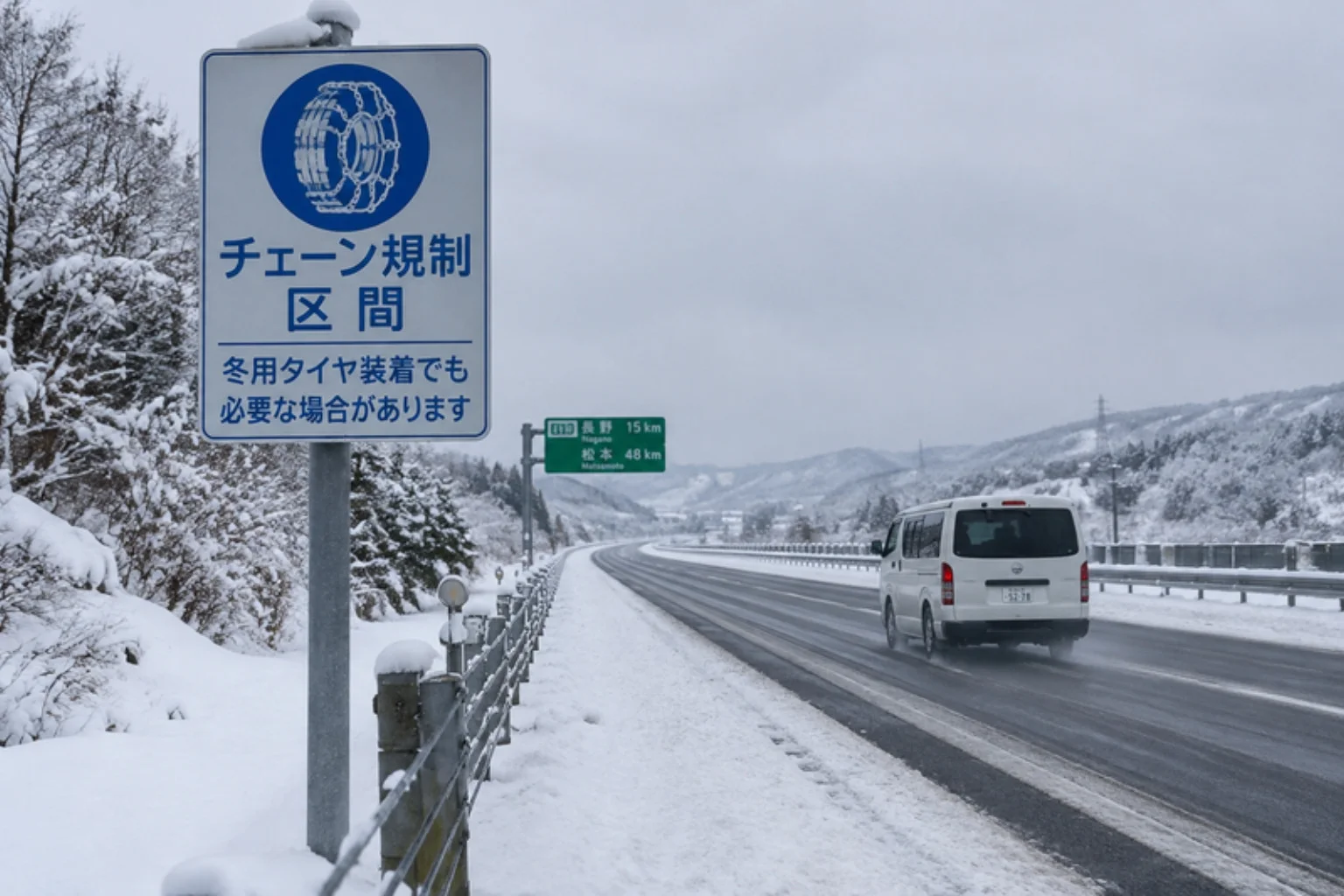
For the legal requirements around winter tires and chain regulation, see our winter driving rules guide. This article covers what's different about the drive itself once you're climbing or descending a pass into ski country.
Seasonal closures are common, not rare
Many mountain roads in Japan's ski regions close entirely for winter, reopening only in spring once snow clearance is complete — this is routine, not an emergency measure. A route that's open and convenient in October may simply not exist as an option in January. Always check the current season's road status for your specific route before building an itinerary around it, rather than assuming a road is open because it appears on a map or was open last time you visited.
Descending is where most of the risk is
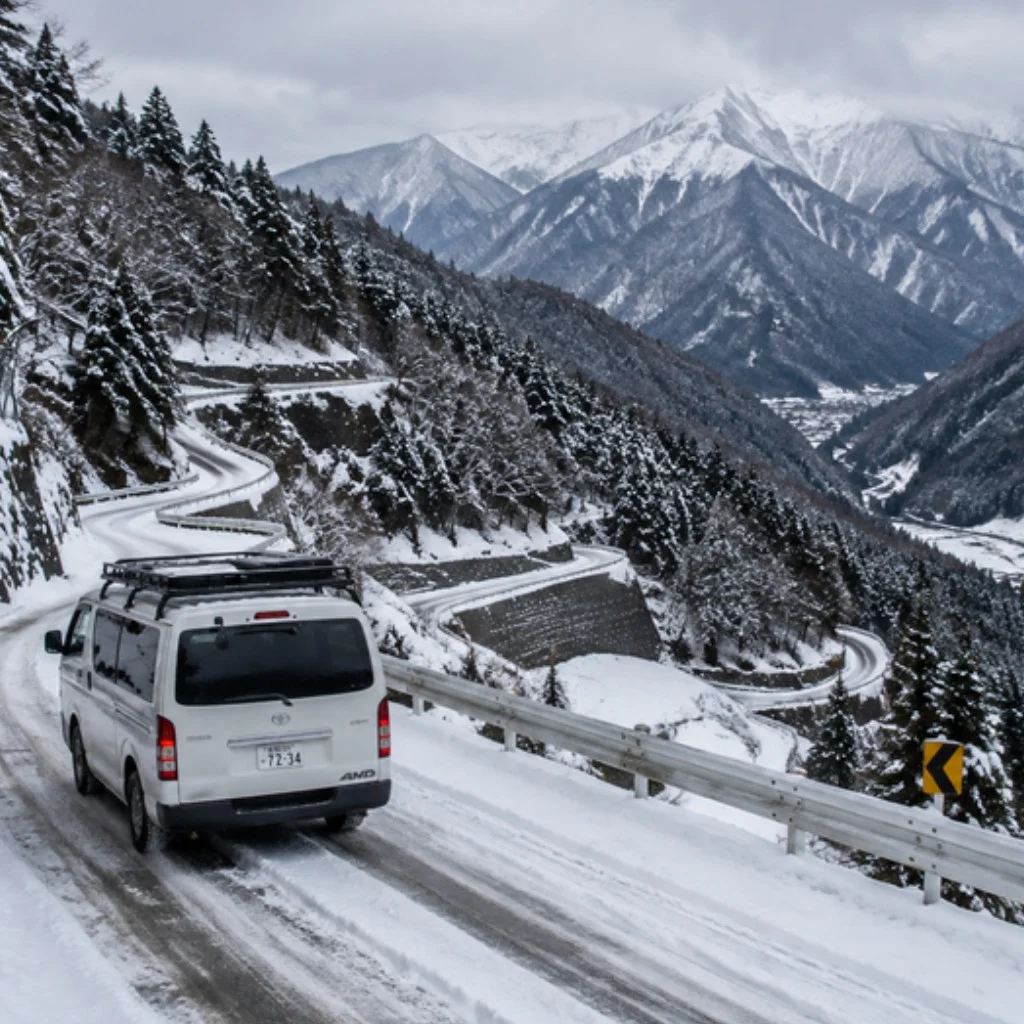
On long downhill sections, riding the brakes continuously causes them to heat up and lose effectiveness — a bigger risk on snow and ice, where you have less grip to begin with. The standard technique on Japanese mountain passes, as on any steep descent, is to shift to a lower gear (or use the "B" / manual-shift mode on an automatic) and let engine braking do most of the work, using the brake pedal only to make small speed adjustments. A loaded 8-seat van has more weight to control downhill than a car, so leave extra following distance and start slowing earlier than feels necessary.
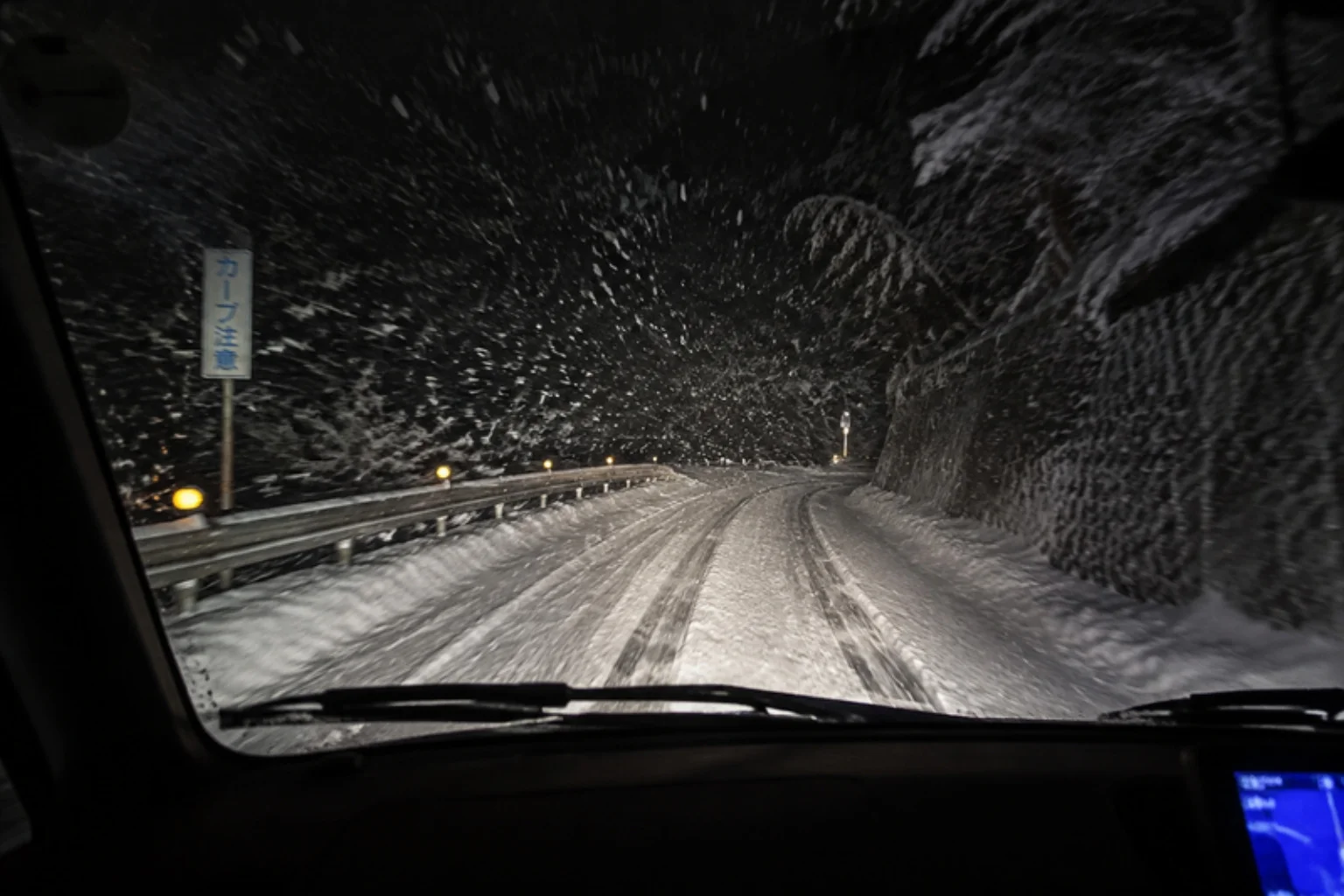
Whiteout conditions: heavy snowfall combined with wind can reduce visibility to a few meters with little warning, especially above the treeline or on exposed ridge sections. If visibility drops sharply, slow down well before you think you need to, use low-beam headlights and fog lights rather than high beams (which reflect off falling snow), and pull into a parking area or service area to wait it out if conditions don't improve.
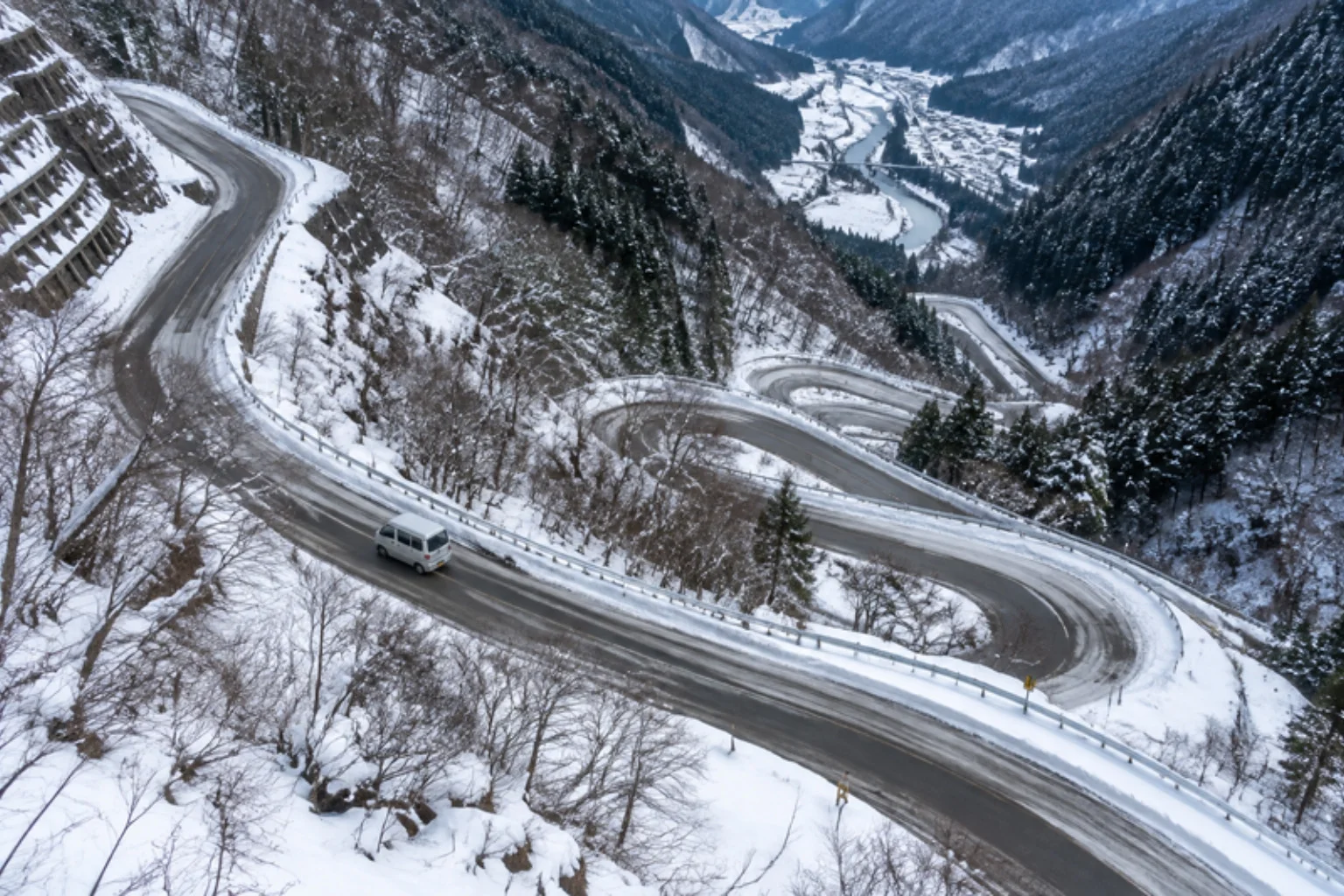
Reading the road surface
- Black ice: most likely on bridges, in shaded sections, and right at tunnel entrances/exits, where the road surface cools and refreezes first.
- Compacted snow vs. fresh powder: compacted snow on a well-driven pass road is often more slippery than fresh snow, since it packs down into a harder, smoother surface.
- Shade and elevation: a pass can be clear and dry at the base and fully snow-covered a few hundred meters higher — don't assume conditions stay constant for the whole climb.
Before you commit to a pass route
- Check the relevant prefectural or NEXCO live road-status page the morning of your drive, not the night before.
- Build a lower-elevation alternate route into your plan for storm days, even if it adds time.
- If you're linking multiple resorts, see our multi-resort route guide for which connections typically stay open through winter.
Road closures and conditions change by season and by storm. Always confirm current status directly with official sources before a mountain-pass drive.