JAPOW VANS
Driving yourself to a Japanese ski resort is easy on a clear day, but winter storms bring real rules you need to know before you set out — not just good habits. Here's what's actually required, based on official sources, not general advice.
Studless winter tires: the baseline requirement
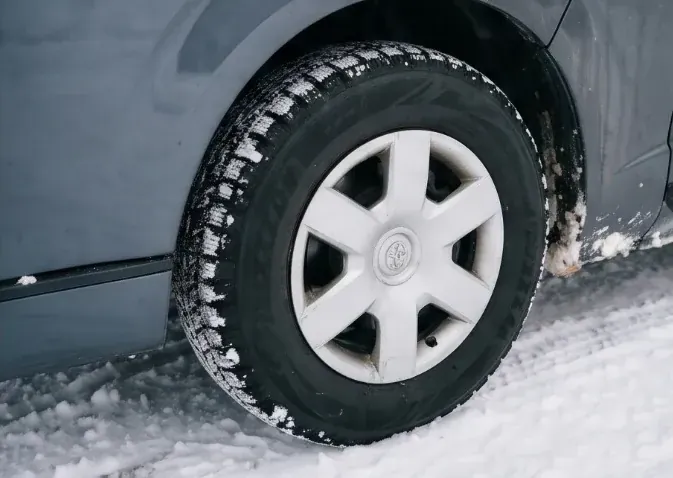
On snow-covered or icy roads anywhere in Japan, driving on regular (non-winter) tires is against the law under prefectural traffic rules, which require some form of anti-skid measure — winter tires or chains — whenever the road surface is snowy or frozen. Every JAPOW VANS HiAce comes with 4WD and premium studless winter tires as standard, so this baseline is already covered for your trip.
Chain regulation: a separate, stricter rule for extreme snowfall
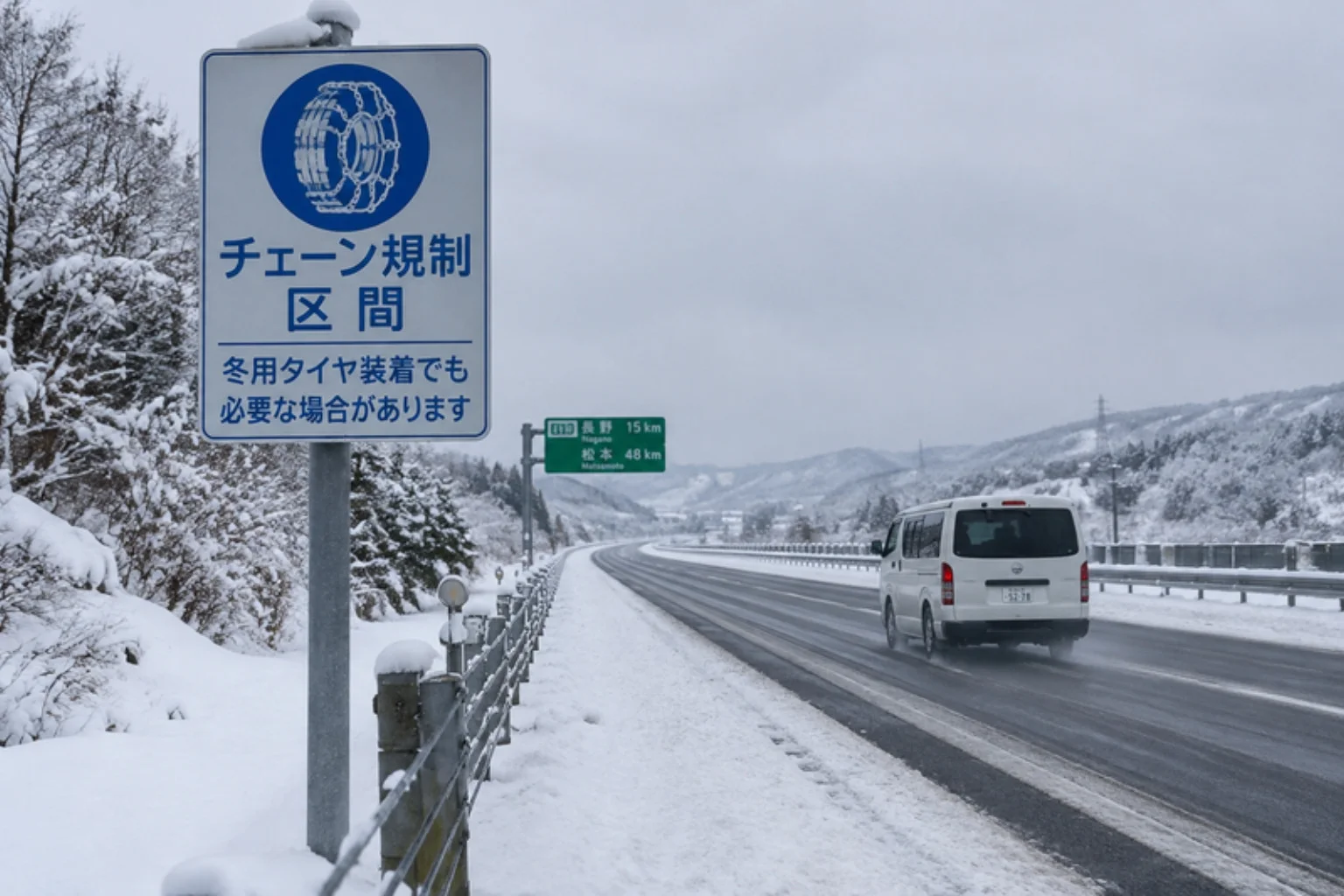
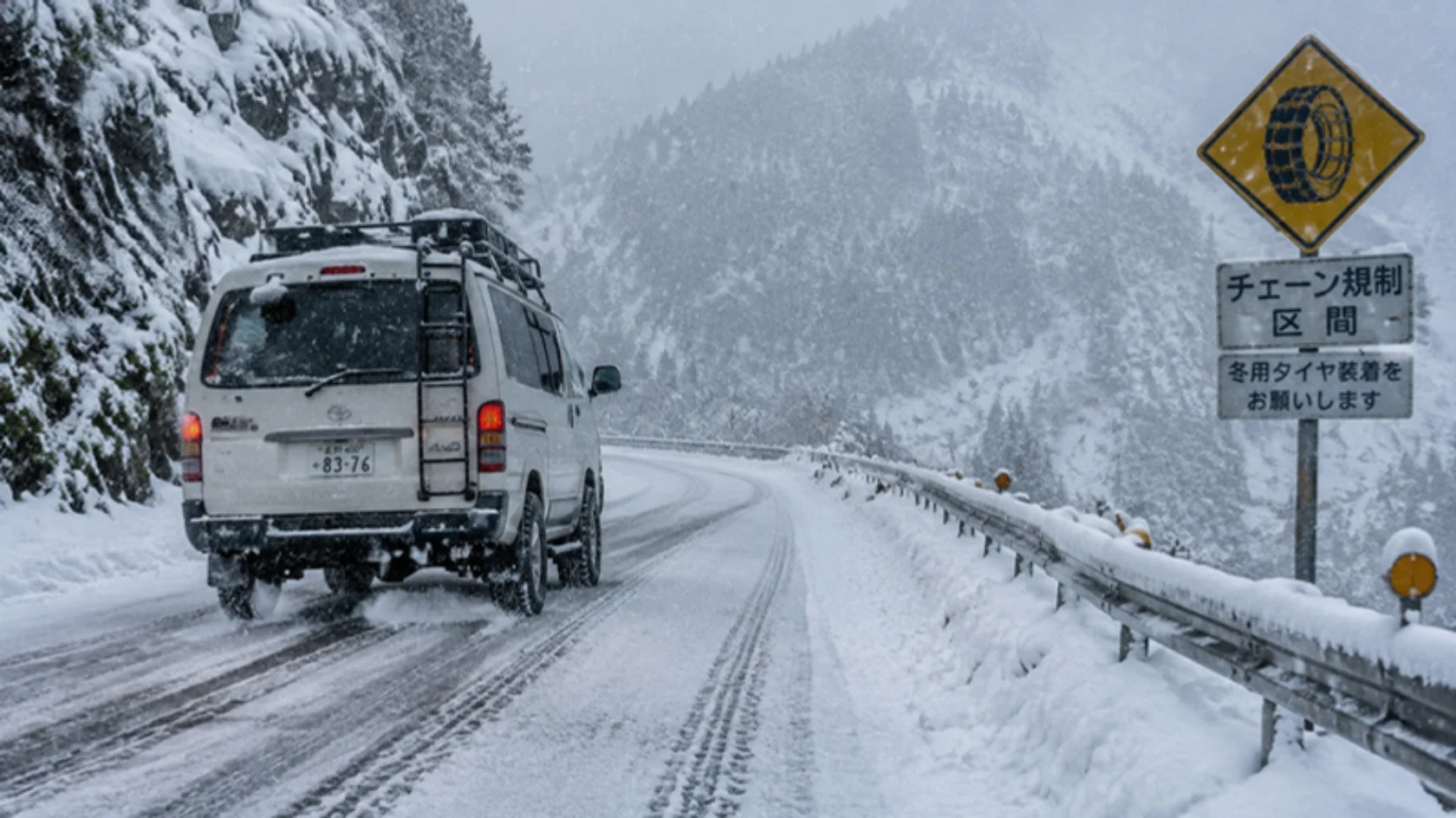
Separately from the studless-tire requirement, Japan's Ministry of Land, Infrastructure, Transport and Tourism (MLIT) and the National Police Agency operate a chain regulation (チェーン規制) system. This is only activated during exceptional snowfall — when a Heavy Snow Special Warning or an emergency heavy-snow announcement is issued — and only on specific mountain-pass sections that have a history of vehicles getting stranded.
When chain regulation is active on a section, studless tires alone are not enough. Vehicles must fit tire chains to pass through, even 4WD vehicles, because braking distance on steep downhill sections increases regardless of drivetrain. Nationwide, there are 14 designated chain-regulation sections: 6 on directly managed national roads and 8 on expressways, concentrated on steep passes with a history of large-scale vehicle pile-ups.
Chain regulation is rare and short-lived — it only switches on during declared extreme-snowfall events, and the affected sections are posted with electronic signage and listed on each NEXCO company's live traffic site. It is not something you'll normally encounter, but if you're driving through the Japanese Alps during a major storm, check before you leave.
Before a mountain-pass drive
- Check your route's live traffic and closure status on the relevant NEXCO company's website (NEXCO East, Central or West, depending on region) before departing.
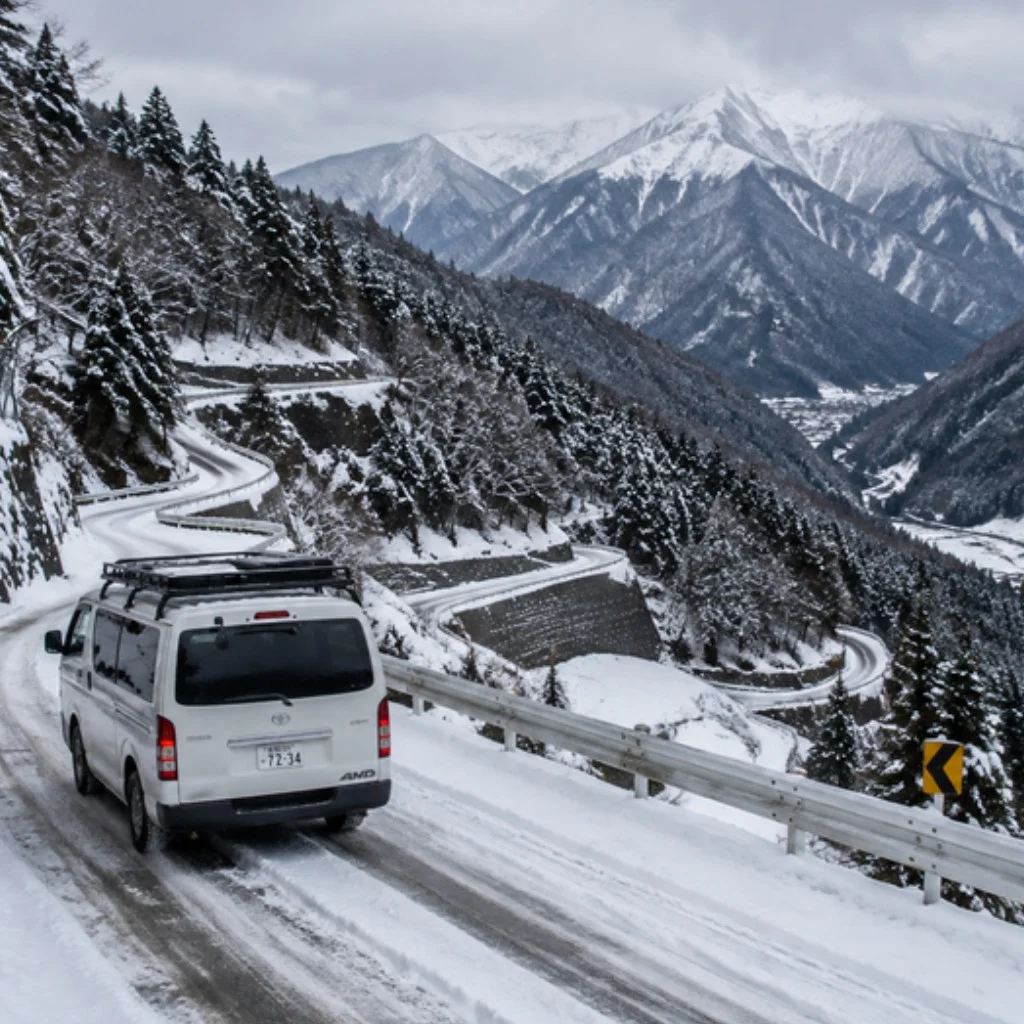
- If a Heavy Snow Special Warning has been issued for your route that day, assume chain regulation may be active and check signage before entering a pass.
- Build a buffer day into multi-resort itineraries, especially right after fresh snowfall, so a closed pass doesn't wreck your schedule.
General winter driving habits
JAF (Japan Automobile Federation) recommends the following for anyone driving on snow or ice in Japan:
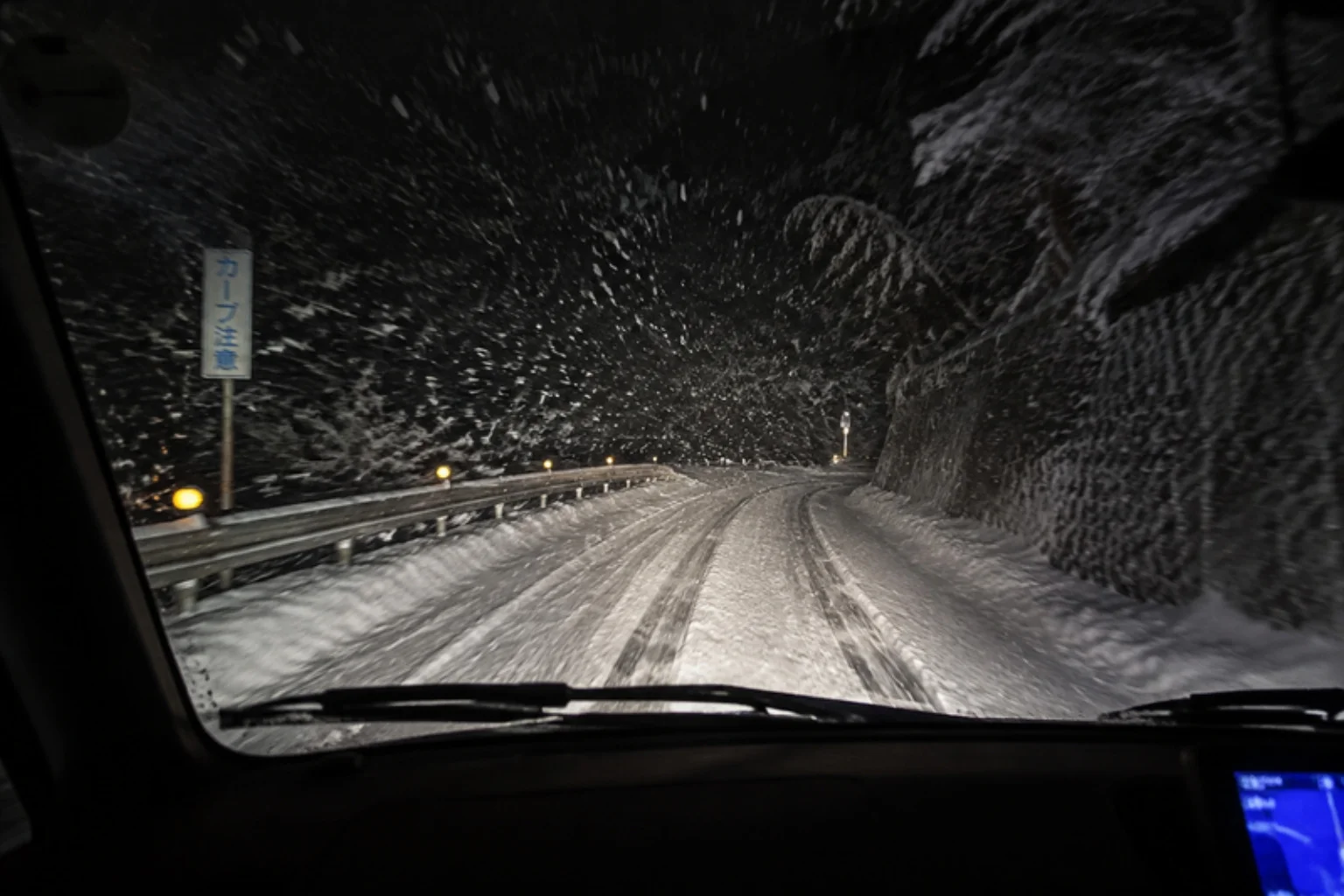
- Avoid sudden steering, braking or lane changes — smooth, gradual inputs only.
- Leave extra following distance behind the vehicle in front.
- Pull away gently; don't floor the accelerator from a stop.
- Clear snow off the roof of your vehicle before setting out.
- Watch for black ice on bridges and at tunnel entrances/exits — these freeze first and are hardest to spot.
Planning your route
- Confirm your International Driving Permit covers your vehicle category before you book — see our IDP guide.
- If you're linking multiple resorts, read our guide to Hakuba, Nozawa, Shiga Kogen and Myoko for how the routes connect.
- Check expressway conditions the morning you drive, not the night before — mountain weather changes fast.
Regulations and designated sections can change season to season. Always confirm current chain-regulation status and road closures directly with the sources below before a mountain-pass drive.