JAPOW VANS
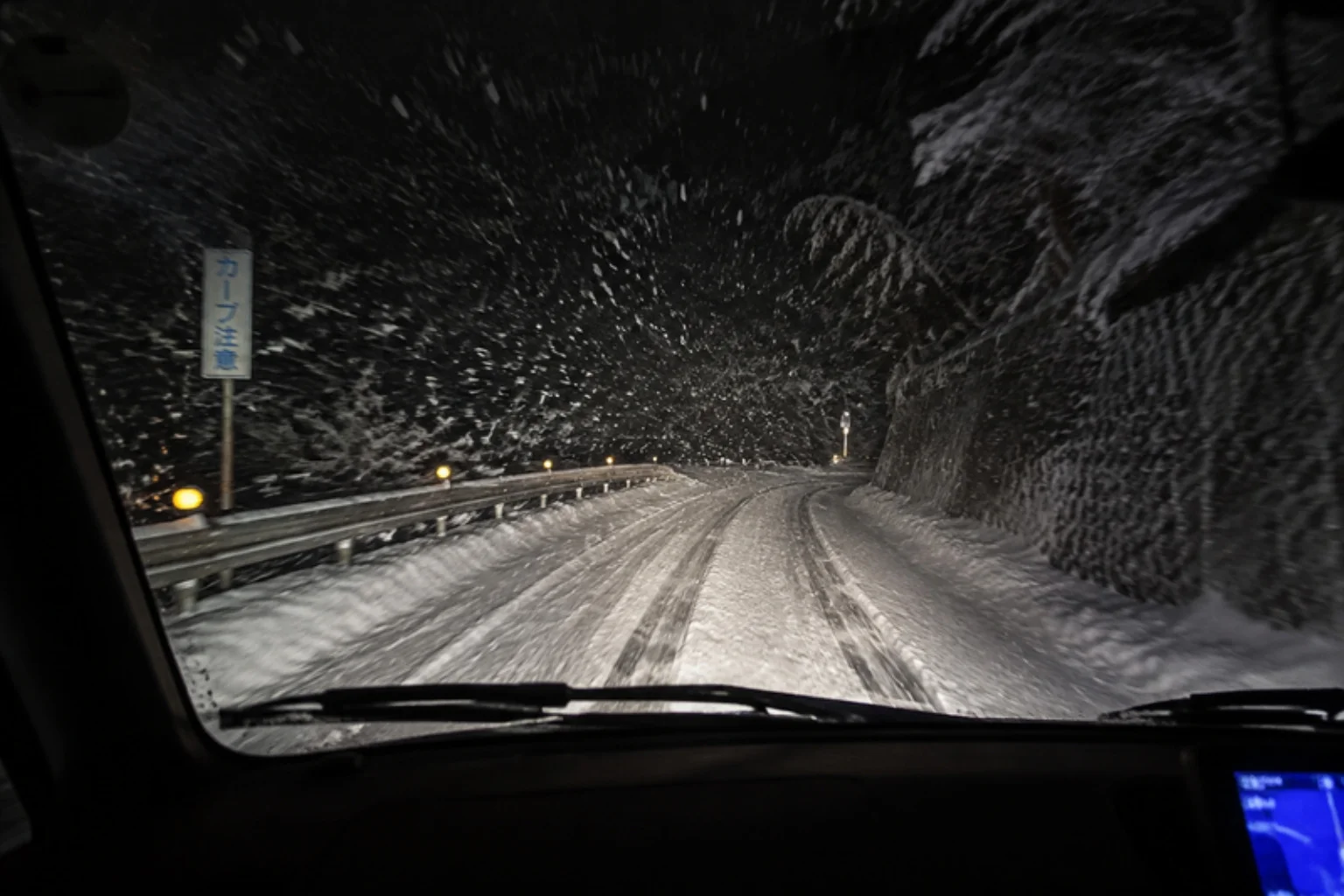
A mountain road that feels manageable in daylight can turn genuinely dangerous after dark. Falling temperatures, limited visibility, and road surfaces that look dry but aren't make night driving in winter meaningfully riskier than the same drive during the day.
Black ice forms fastest at night
As temperatures drop through the evening and overnight, road surfaces that were simply wet during the day can refreeze into a thin, nearly invisible layer of ice — commonly called black ice. According to JAF testing, braking distance on black ice can be roughly six times longer than on a normal wet road, and because it often looks like ordinary wet asphalt, drivers frequently don't realize the surface has changed until they're already sliding.
Watch for bridges, overpasses, and tunnel entrances/exits. These spots lose heat faster than the surrounding road and are reported as the most common locations for black ice to form first, even when the rest of the route looks clear.
Visibility drops fast in blowing snow
Windy nights can produce sudden localized whiteouts, known in Japanese as jifubuki, where loose snow blows up off the road surface and cuts visibility to just a few meters with little warning. Braking hard in this situation is itself a hazard — the safer response is to slow down well in advance and increase following distance, rather than reacting suddenly when visibility drops.
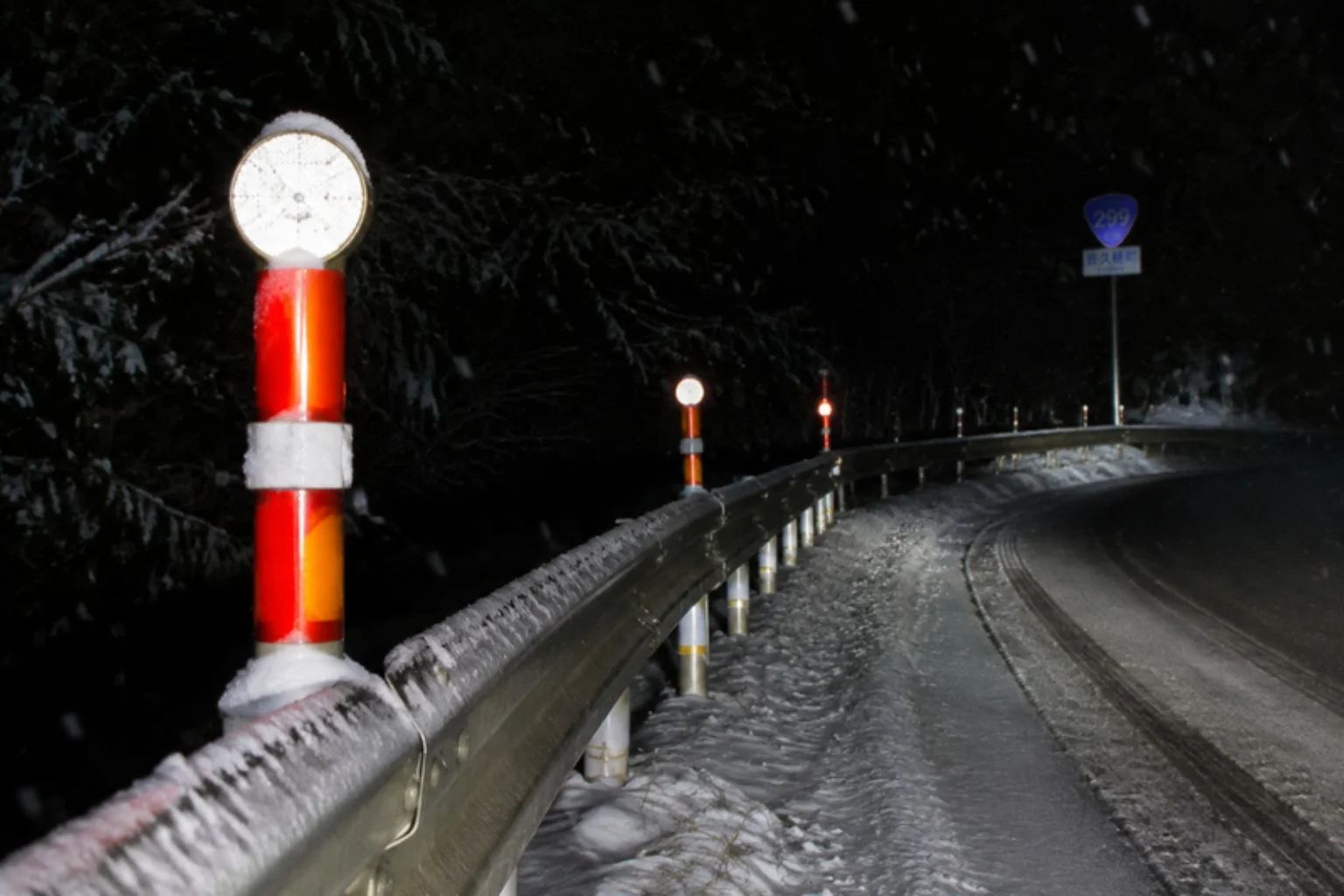
Use the snow poles as your lane guide
On rural and mountain roads in snow country, you'll see tall red-and-white or yellow poles spaced along the roadside. These are snow poles (スノーポール), a type of delineator built taller than standard road markers specifically so they stay visible above deep snowbanks. They exist to guide drivers' sightlines at night and in poor visibility, and to help snowplow crews find the road edge — when lane markings are buried, the poles are often your only reliable reference for where the road actually is.
Practical tips for driving after dark
- Reduce speed further than you would in daylight — your stopping distance assumptions from dry or even daytime-wet roads don't apply once temperatures drop after sunset.
- Increase following distance to account for longer, less predictable braking distances on surfaces that may be icier than they look.
- Use low beams in falling snow — high beams reflect off falling snowflakes and can reduce visibility rather than improve it.
- Watch fuel and battery margins — getting stuck overnight on a rural mountain road is far more serious in freezing temperatures than during the day.
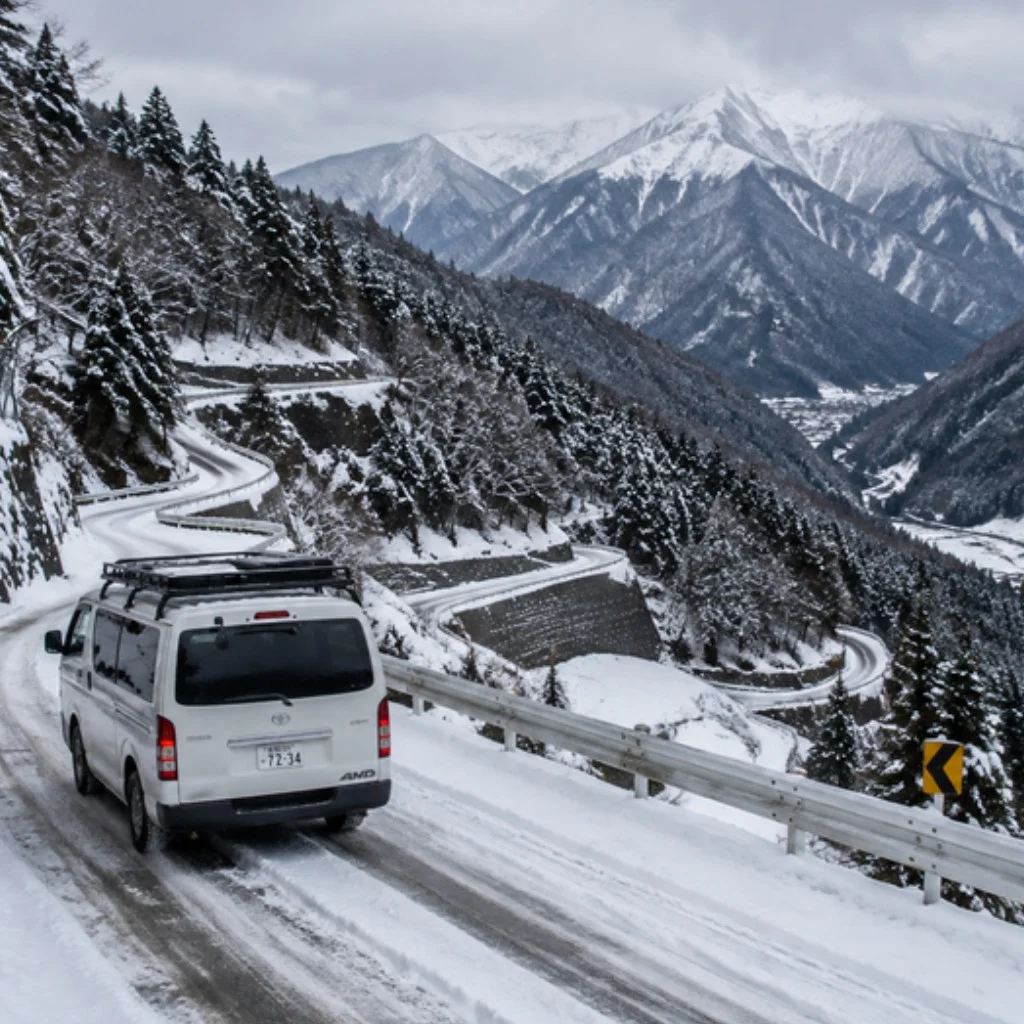
- When possible, time your drive to arrive before dark, especially for mountain-pass sections. See our mountain pass driving guide for ascent/descent technique that applies doubly after sunset.
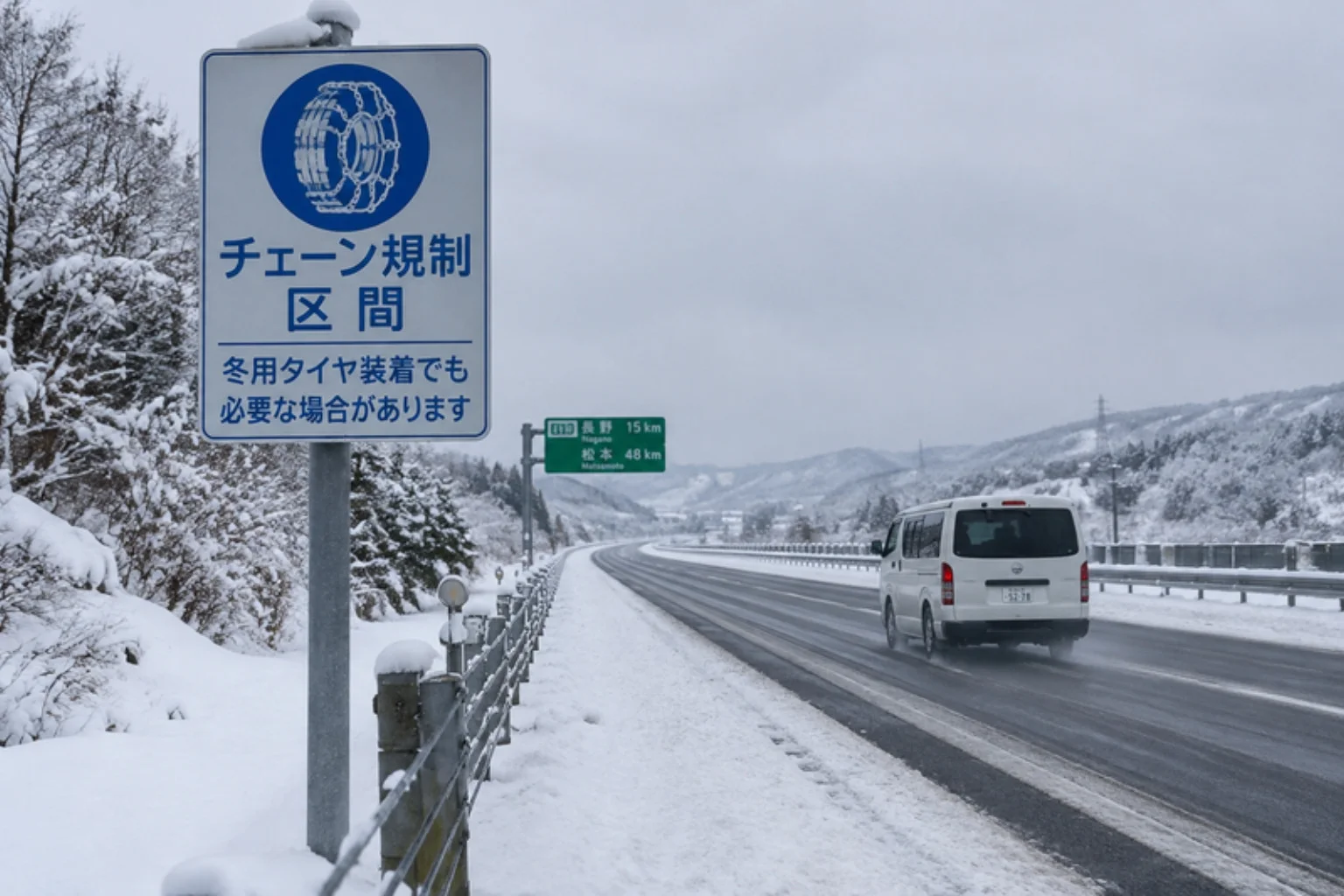
For the broader rules on when chains or winter tires are required, see our winter driving rules guide.
Sources: JAF — winter road driving precautions; JAF — black ice braking distance test.