JAPOW VANS
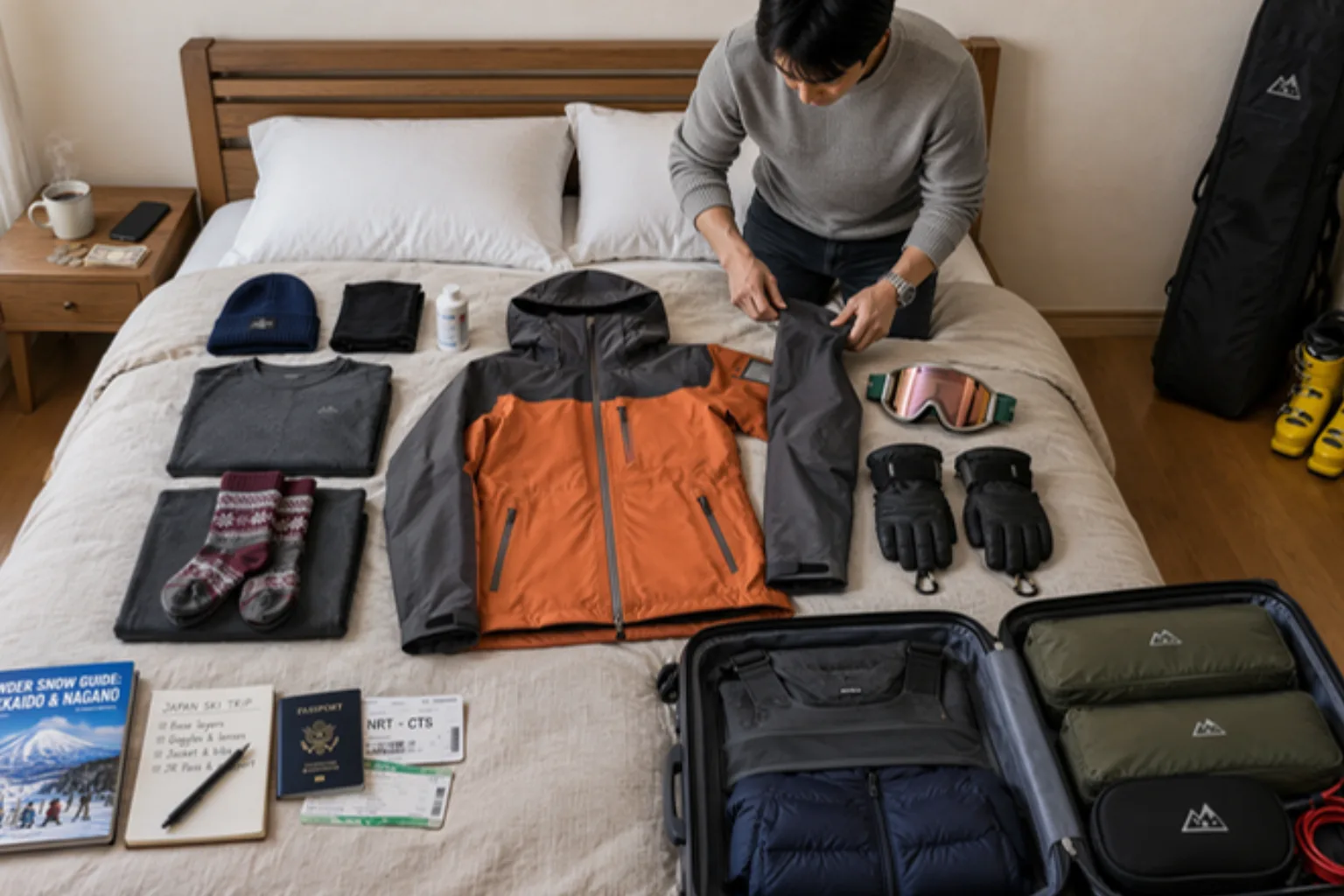
Nagano and Niigata's resorts sit at relatively modest elevations compared to the Rockies or the Alps, but storms roll through often and temperatures swing from a sunny mid-morning to a biting afternoon squall. A simple three-layer system handles most of what the mountain throws at you, and the same layers work well for walking around a snowy town in the evening.
The three-layer system
Base layer
A merino wool or synthetic base layer top and bottom, not cotton. Cotton holds moisture against your skin and stays cold once you sweat, which happens fast on a powder day.
Mid layer
A fleece or light insulated jacket. On warmer days you can ski in just the base and shell; on cold days add the mid layer underneath.
Outer shell
A waterproof, breathable jacket and pants. Japan's snow is usually dry, but storm days bring real volume, and a shell that isn't fully waterproof will soak through by afternoon.
Accessories that matter more in Japan
- Goggles with a low-light lens: storm days with flat, overcast light are common; a second lens or photochromic goggle helps visibility.
- Neck gaiter or balaclava: useful on chairlifts in wind, and doubles as a scarf walking around town.
- Waterproof gloves with a spare pair: a wet glove on a multi-day powder trip is miserable; pack two pairs so one can dry overnight.
- Warm indoor socks: most lodges and onsen changing rooms are tatami or wood floor — thick socks or slippers are worth packing separately from ski socks.
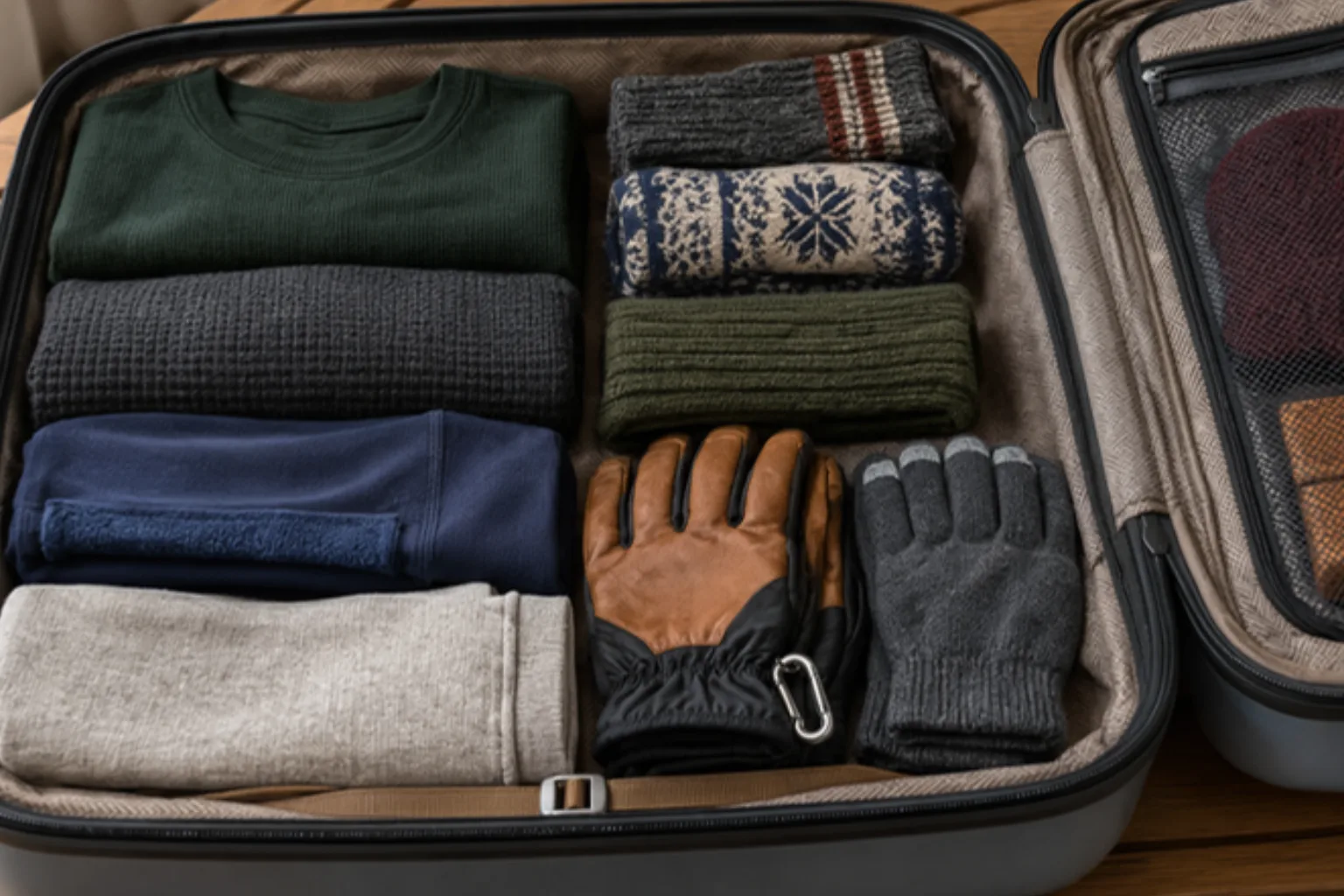
Packing for town, not just the mountain
Most ski towns in Nagano and Niigata involve walking between your lodging, restaurants, and the lift — often on packed snow or ice. Bring a pair of waterproof, grippy boots for evenings, since sneakers and onsen-visit indoor shoes aren't built for icy sidewalks. If your trip includes an onsen, see our onsen etiquette guide for what (and what not) to bring into the bath.
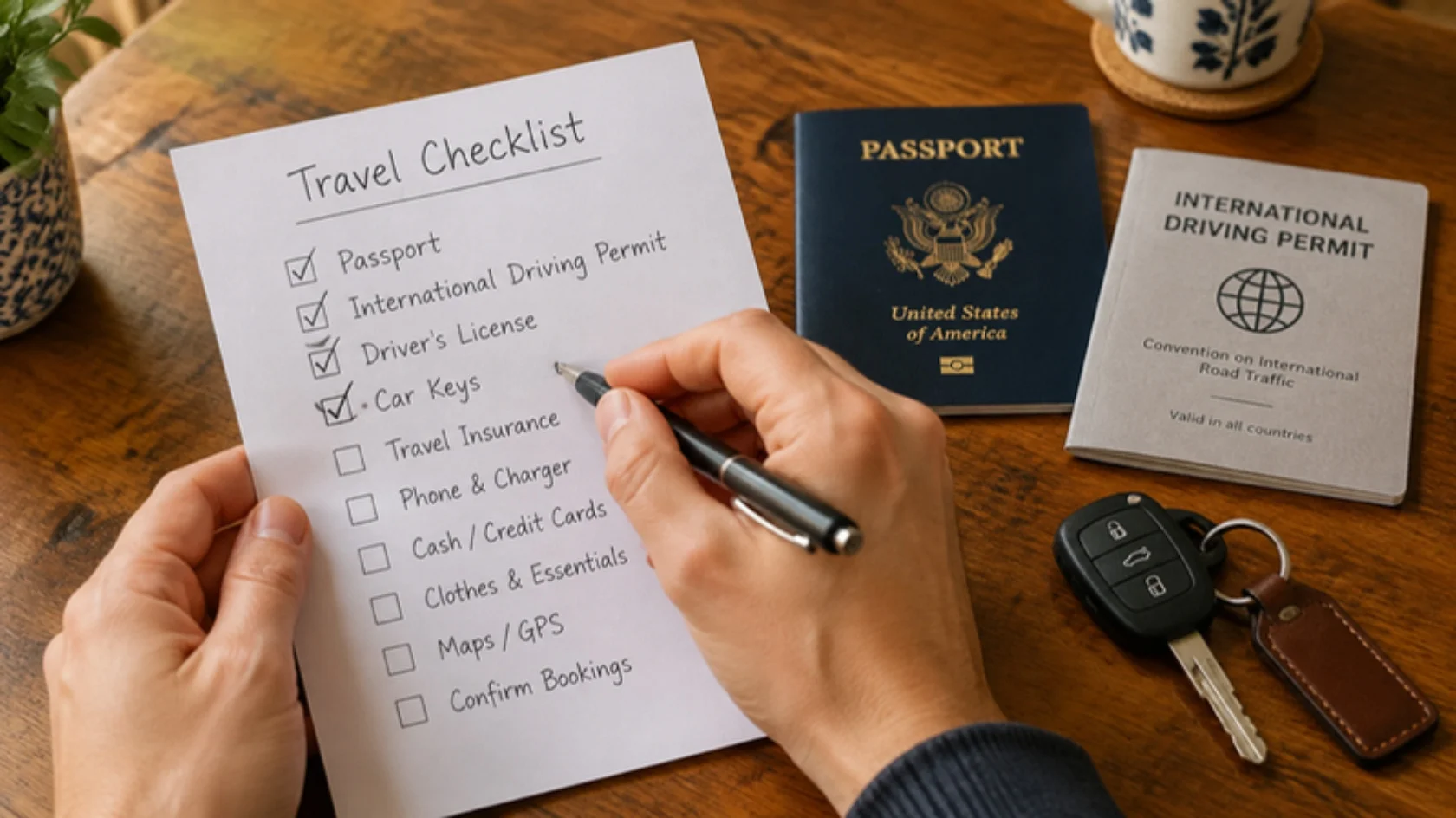
Packing for a van trip with others? Space fills up fast once everyone's ski bags, boots, and town clothes are loaded. Our road trip checklist covers how to pack efficiently for a full group.
Weather and snow conditions vary by region and season — check the Japan Meteorological Agency's forecast for your specific resort closer to your travel dates.