JAPOW VANS
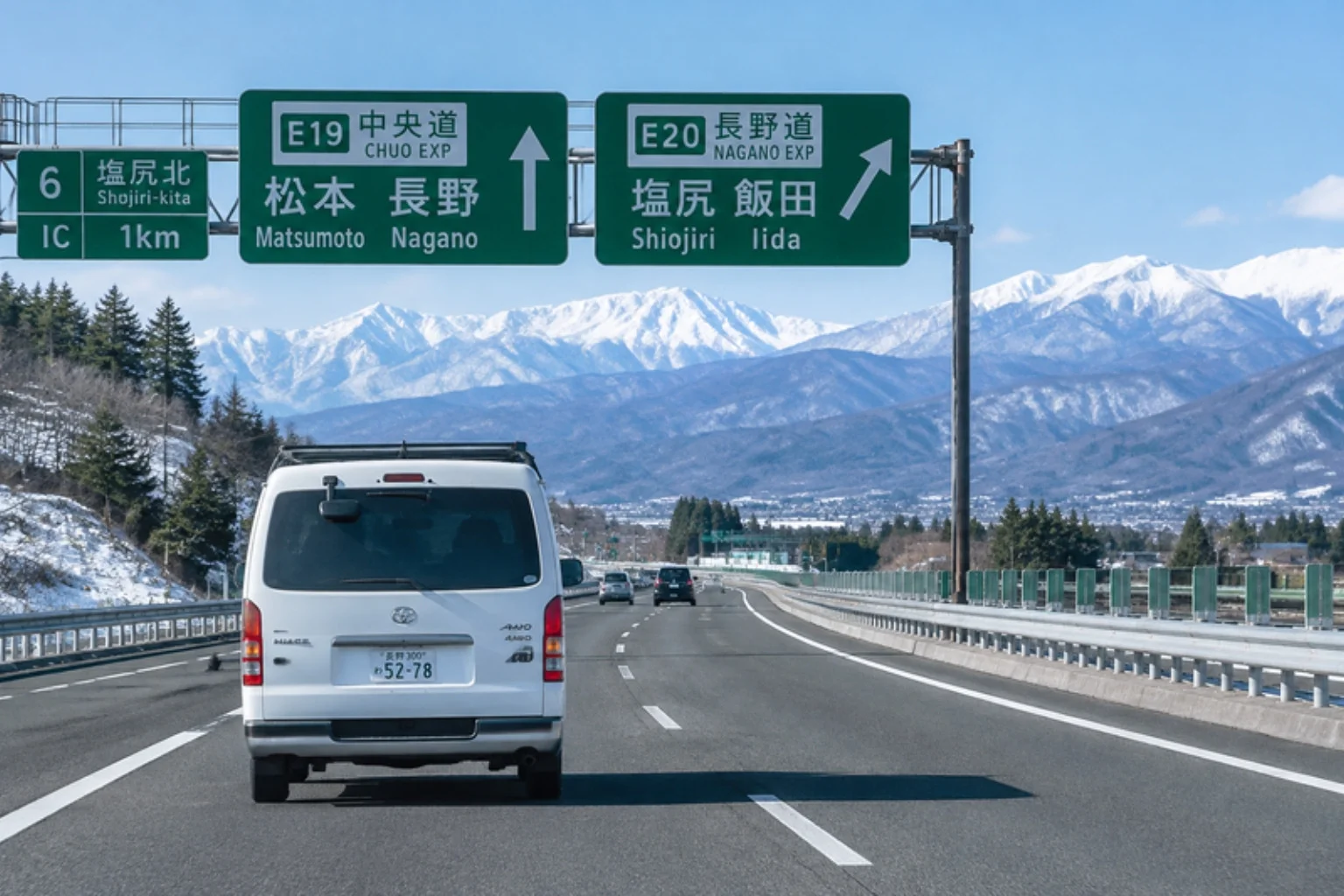
Hakuba Valley is one of the most popular self-drive destinations for visiting skiers and snowboarders, and the route from Tokyo is fairly straightforward: almost the entire drive is on expressway. Here's what the trip actually involves.
Route overview
The standard route runs west out of Tokyo on the Chuo Expressway, continues to Okaya Junction, switches onto the Nagano Expressway, and exits at Toyoshina IC before joining Route 147/148 north into the valley. The total distance is about 260km (162 miles).
| Distance | Approx. 260 km (162 mi) |
|---|---|
| Drive time | Approx. 3 hr 30 min in clear conditions via expressway (Chuo Expwy → Okaya JCT → Nagano Expwy → Toyoshina IC) |
| Main road numbers | Chuo Expressway (E20) → Nagano Expressway (E19) → Route 147/148 |
That 3.5-hour figure is a dry-road estimate. In winter, snow, reduced speed limits, and chain-regulation stops can add well over an hour. Always check your navigation app's live estimate on the day rather than planning around the dry-weather number.
Tolls
Expressway tolls in Japan are charged by distance — roughly ¥24.6 per km plus a fixed terminal charge on most sections (see our ETC toll guide for the full method). For a standard-sized car or van covering around 260km, that works out to approximately ¥6,000–6,500 one-way with ETC. Actual tolls vary by exact entry/exit IC and any time-of-day discount, so check the fare at booking with NAVITIME or NEXCO's toll calculator for your specific interchanges.
What to expect on the road
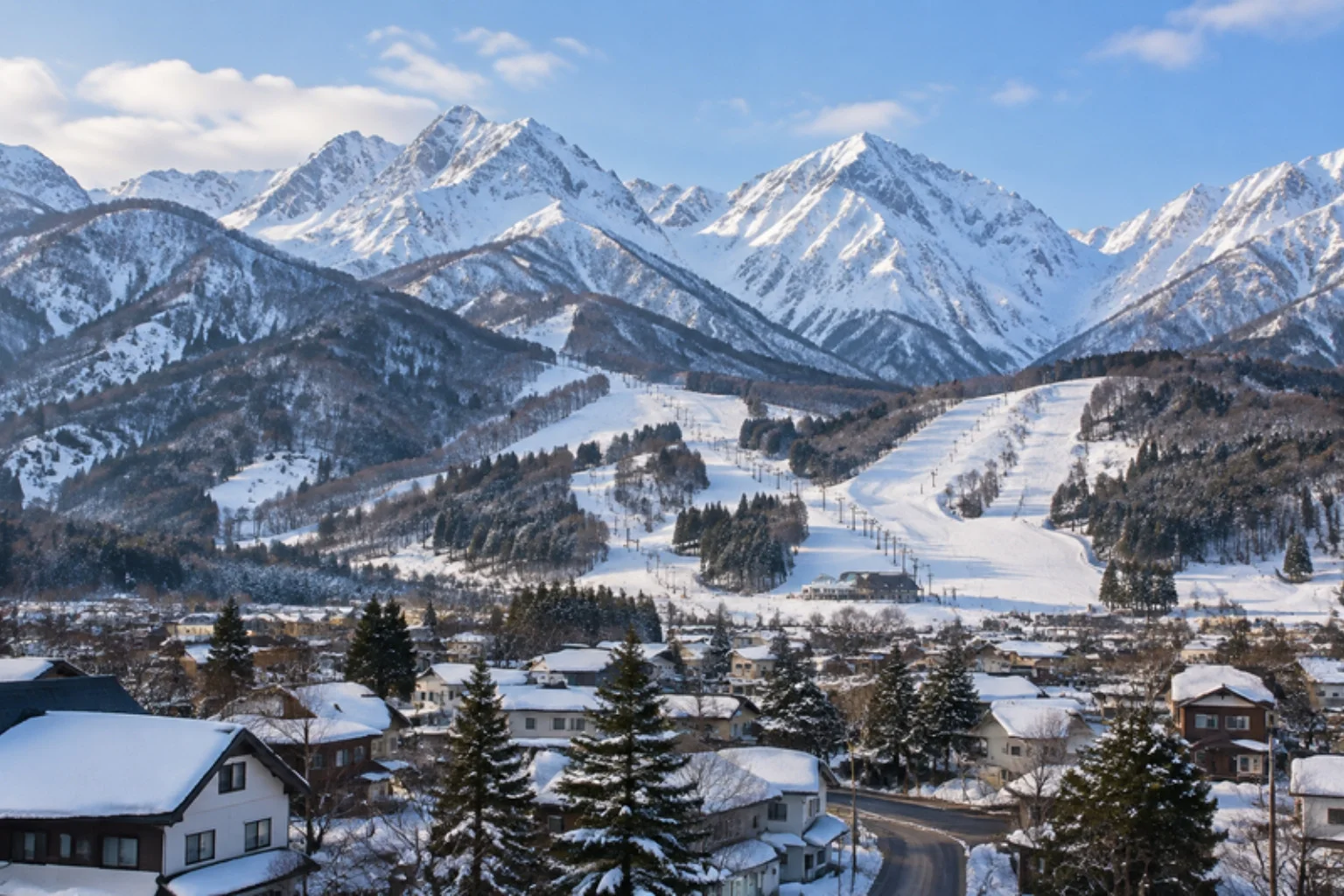
Part of the route through Nagano Prefecture on the Chuo and Joshinetsu Expressways passes through sections where chain regulations can be activated during heavy snowfall — see our guide to Japan's designated chain-regulation sections for the full list. Carry chains or snow tires and check conditions before you leave; our winter driving rules guide covers when regulations apply and what's required.
The final stretch off the expressway climbs gradually into the valley on local roads, so allow extra time and keep a safe following distance — see our mountain pass driving guide for descent and ascent technique in snow.
Self-drive vs. train and bus
The alternative is Hokuriku Shinkansen to Nagano Station plus a connecting bus to Hakuba, which takes roughly 3 hours door to door but is priced per person. For a group traveling together with ski or snowboard bags, a self-driven van is usually simpler and cheaper — we break down the numbers in our bus vs. self-drive cost comparison.
Route and toll information based on NEXCO and NAVITIME highway route data; always confirm current conditions and exact tolls before departure.